


Explore the Most Unique Places of the Hungarian Capital Budapest

Updated: Apr 14
Budapest is such a vibrant city with so much to see and do, which is exactly why I wanted to put this post together, to help you figure out how to make the most of your time here. In my opinion, 4to 5 days is just right to truly experience the city; anything less doesn’t quite fit the bill and a little over feels like an overkill.
This isn’t your typical guide to all the usual tourist spots, you’ll find plenty of those elsewhere. Instead, I want to share some of the more unique experiences and hidden gems that I came across during my time in this amazing city. So keep reading and stay with me, because along the way I’ll be sharing some special finds that you might not come across as easily while exploring Budapest on your own.

Budapest with Kids?
I was channeling my inner energy all day, only to keep my little musketeers busy on this upcoming trip. And this was quite a task at hand because our next holiday was planned to the city of badass partying. Yeah Budapest Hungary! Notorious for its underground pubs and bars, Budapest is every party animal’s Go-To place! So, how did we manage this?
My in-laws were especially excited to visit Budapest as it had long been on their wishlist, so we decided to travel together, and it worked out perfectly. It truly felt like the best of both worlds. We spent our days exploring as a family, and in the evenings, while the kids and parents rested, we got to enjoy the city’s nightlife. Luckily, our kids travel so easily, making the whole experience smooth, fun, and a complete win-win for everyone.
And what makes Budapest even more special is how versatile it is. It’s not just a party capital, it offers something for every age and travel style. From relaxing thermal baths like Széchenyi Thermal Bath, to deep-rooted history shaped by World War II and the communist era, to charming cafés, beautiful restaurants, hidden gems, parks, and play areas for kids, the city truly caters to everyone. And thats how we got to exploring the magic of the Hungarian capital Budapest with our kids.
But First, the Essentials: How to Reach, Getting Around, Currency & Best Time to Visit
Budapest, the capital of Hungary, is located in Central Europe along the Danube River. Hungary is surrounded by Slovakia to the north, Austria to the west, Romania to the east, and Serbia to the south.
How to Reach Budapest
Budapest is very well connected internationally, making it an easy destination to reach. Most travelers arrive via Budapest Ferenc Liszt International Airport, which is about 30 to 40 minutes from the city center. From the airport, you can take the 100E airport bus directly into the city, a taxi (around €20–30), or airport shuttles. If you’re traveling within Europe, trains are a great option, Budapest has direct connections from cities like Vienna (2.5–3 hours), Bratislava (2 hours), and Prague (6–7 hours). Buses like FlixBus are also budget-friendly and widely available.
Getting Around the City
Getting around Budapest is simple and efficient thanks to its excellent public transport system, including metros, trams, and buses. Taxi apps like Bolt are widely used and affordable, and many of the main attractions are close enough to explore on foot, especially in the city center. Tram 2, in particular, is famous for its scenic route along the Danube. You can buy single tickets or travel passes (24, 48, or 72 hours), which are very convenient if you plan to explore a lot. Walking is also a great way to explore, especially around central areas like the Jewish Quarter, riverside, and castle district.
Currency & Payments
The local currency is the Hungarian Forint (HUF). While card payments are accepted almost everywhere, it’s still useful to carry some cash for smaller shops, markets, or local vendors. Euros may be accepted in some places, but it’s always better to pay in the local currency.
Best Time to Visit
The best time to visit Budapest is during spring (March to May) and autumn (September and October) when the weather is pleasant and the crowds are smaller. Summer (June–August) is the busiest time, with festivals, river cruises, and vibrant nightlife, though it can get quite hot and crowded, while winter offers a cozy charm with Christmas markets and relaxing thermal bath experiences.
Trip Planning: Explore the Most Unique Places of the Hungarian Capital Budapest
The obsessive planner in me definitely took over, and I’m so glad it did! This itinerary is exactly how I explored Budapest, and honestly, it helped me discover some really unique experiences along the way. While you’ll find plenty of tours on platforms like GetYourGuide or Viator, some of the best moments came from just planning smartly and leaving room for those unexpected finds 😍.
Before planning, I first understood the city. Budapest is actually made up of two sides, Buda and Pest, divided by the Danube River. Buda is the hilly, quieter side with viewpoints and historic sites, while Pest is flat, lively, and full of cafés, restaurants, and city life. The two were once separate cities before being united in 1873.
I planned my trip by grouping nearby areas together, which made everything easy to explore on foot and much less tiring.
Day 1 was intentionally kept light, since it was our first day and we had a late night before because of travel, something that will likely apply to most people arriving in the city. So we explored the Jewish Quarter on the Pest side, and enjoying all the street art around the area at a relaxed pace. We ended the day with a Danube River cruise and one of our favourite experiences, dining at Sir Lancelot Medieval Restaurant.
Day 2 focused on Downtown Pest. From there, we continued towards Andrássy Avenue. The day ended with a visit to Szimpla Kert, one of Budapest’s famous ruin bars.
Day 3 was a mix of Pest and Buda. We crossed the Széchenyi Chain Bridge to the Buda side and explored the Castle District. We wrapped up the day with a meal at the historic Százéves Étterem.
Day 4 was slower and more scenic, spent around Gellért Hill on the Buda side. We ended the trip with dinner at the beautiful New York Café.
Table of Contents: Explore the Most Unique Places of the Hungarian Capital Budapest Budapest with Kids? Trip Planning Essentials: How to Reach, Getting Around, Currency & Best Time to Visit Day 1 : Jewish Quarter (Pest Side) and Danube River Cruise Jewish Quarter - Dohány Street Synagogue Gozsdu Courtyard Kazinczy Street - Budapest’s Graffiti & Food Hotspot Danube river cruise Dinner at Sir Lancelot Medieval Restaurant Day 2 : Downtown Pest Great Market Hall Liberty Bridge Váci Street St. Stephen's Basilica Andrássy Avenue Szimpla Kert Ruin Bar Day 3 : City Park (Pest Side) and Castle District (Buda Side) Heroes' Square Hungarian Parliament Building Shoes on the Danube Bank Széchenyi Chain Bridge Buda Castle Fisherman's Bastion Matthias Church Százéves Étterem, the '100-Year-Old Restaurant' Day 4 : Gellert Hill (Buda Side) Gellert Thermal Bath Cave Church Citadella & the Liberty Statue Dinner at New York Café |
Optional: Walking Tour of Budapest
If you don’t want to plan separate itineraries for Buda and Pest on your own, you can simply kickstart your Budapest trip with a walking tour instead. The guide will meet you at the downtown meeting points either at Elizabeth Square or at Vörösmarty Square. Over the course of about three hours, your guide will take you through some of the city’s most important and interesting spots, including St. Stephen’s Basilica, the grand Hungarian Parliament Building, and the scenic riverfront along the Danube. They will also stop at moving Shoes on the Danube Bank memorial, walk across historic areas near Chain Bridge, Liberty Square, and viewpoints towards Buda Castle. Some tours add the Jewish Quarter or Andrássy Avenue depending on the time.
The guide will share fascinating insights about Budapest’s past, from the Austro-Hungarian Empire to World War II and communist times, in a way you wouldn’t have experienced on our own. It will cost you €35 per person, and honestly, it is incredibly educational, fun, and informative, definitely worth it. I truly feel like there’s no better way to start exploring a city you’ve been dreaming about! If you’re planning a visit, I highly recommend checking out this walking tour: Free Walking Tour of Budapest.
Besides the regular city introduction, Budapest also has some really interesting themed walking tours. You can choose from tours about communist history with house of terror option, tour of the Jewish Quarter (with synagogue ticket), pub crawl tour of ruin bars, 'dark history' tours, and even ones that focus mainly on Buda Castle.
Day 1: Jewish Quarter (Pest Side) and Danube River Cruise
Jewish Quarter - Dohány Street Synagogue
We visited the Dohány Street Synagogue, the largest synagogue in Europe, located right in the Jewish Quarter. The synagogue itself is beautiful and very grand, but what really stood out was the history behind it. The ticket also includes access to the Jewish Museum, where you can learn more about the culture and heritage, and the Holocaust Memorial in the courtyard, which is very moving to see. One interesting fact is that it can seat around 3,000 people, making it not just the largest in Europe but also one of the largest synagogues in the world.

It’s usually open from around 10:00 AM to 6:00 PM (timings can vary), and tickets cost about €20–25, often including a guided tour which is definitely worth it for the insights.
Gozsdu Courtyard
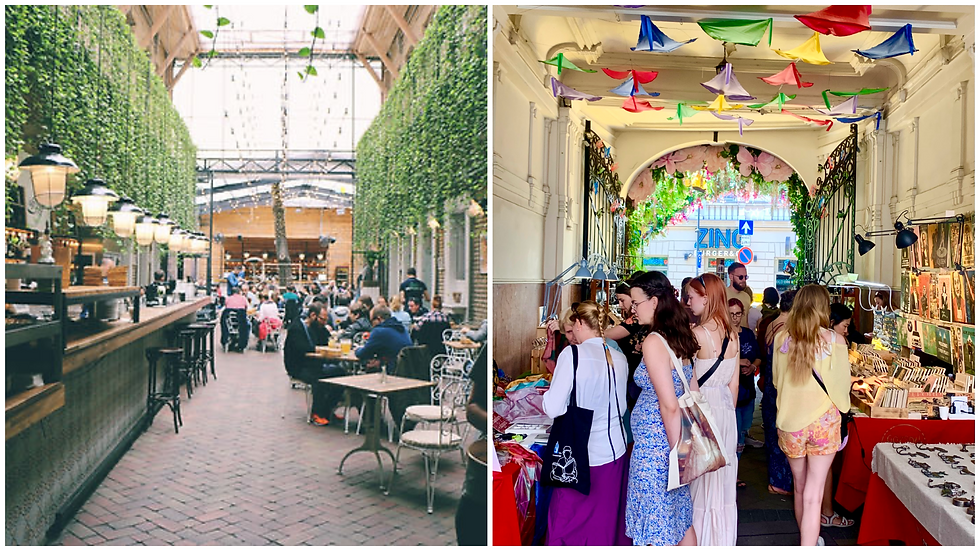
We visited Gozsdu Courtyard, a lively spot in the Jewish Quarter, and it turned out to be such a fun experience. The courtyard is filled with restaurants, cafés, bars, and little shops, creating a buzzing atmosphere throughout the day. When we were there, there was a vintage market along with kids’ activities like face painting, which made it feel even more vibrant and family-friendly. It’s open all day, but really comes alive in the evening when the lights, music, and crowds pick up. It’s a great place to walk around, grab food or drinks, shop for unique items, and just soak in the lively vibe of Budapest.
⭐⭐⭐Unique Find
Kazinczy Street – Budapest’s Graffiti & Food Hotspot
We were staying very close to this street, so we decided to explore the area, and it quickly became one of our favorite parts of Budapest. Walking along Kazinczy Street, we saw lots of graffiti and murals on the walls. These artworks show how the area has transformed, from an old, neglected neighborhood after the war into a lively, creative place. Artists used street art to bring the area back to life and make it their own. Today, it’s one of the most popular streets in the Jewish Quarter, known for its ruin bars like Szimpla Kert (one of the first of its kind), trendy restaurants, and buzzing nightlife. The street is also close to important landmarks like the Dohány Street Synagogue, the largest synagogue in Europe. It’s a street that really is worth exploring!

Danube River Cruise
The first thing any tourist does is take the amazing Danube river cruise. The cruise is a great way to explore the city of Budapest and see its main highlights from a completely different perspective.

Onboard, you can buy drinks and snacks, and there’s plenty of space to stand out on the deck and enjoy the views as you glide past famous landmarks along the river. There’s also a guide (or audio guide) that shares interesting facts and stories about all the places you pass, which makes the experience even more enjoyable and informative.
⭐⭐⭐Unique Find
You might wonder what's so unique about the Danube River cruise, right? One of the most unique things about a Danube river cruise in Budapest is that you get to see both sides of the city, Buda and Pest, at the same time, which you really can’t experience any other way! As you glide along the Danube River, you pass by some of the city’s most iconic landmarks like the Hungarian Parliament Building, Buda Castle, and the Chain Bridge, all beautifully lined up along the riverbanks. Just imagine at sunset, when the entire city lights up in golden lights!

Danube river cruises in Budapest run at different times throughout the day (like 12 pm, 2 pm and 4 pm), but the most popular ones, especially for sunset, usually start around 6:30 to 7:00 PM (earlier in winter). Most cruises depart from the Pest side of the Danube, typically near Elizabeth Bridge or Vigadó Square, with the exact dock mentioned on your ticket. It’s best to arrive about 15–20 minutes early to avoid any last-minute rush. You can book the cruise using the link here. It’s usually about a 1-hour cruise and costs around €15–25 per person, depending on the type of cruise you choose. It’s definitely one of the best and easiest ways to experience Budapest from the water. |
⭐⭐⭐Unique Find
The Ultimate Medieval Dining Experience in Budapest - Sir Lancelot Medieval Restaurant
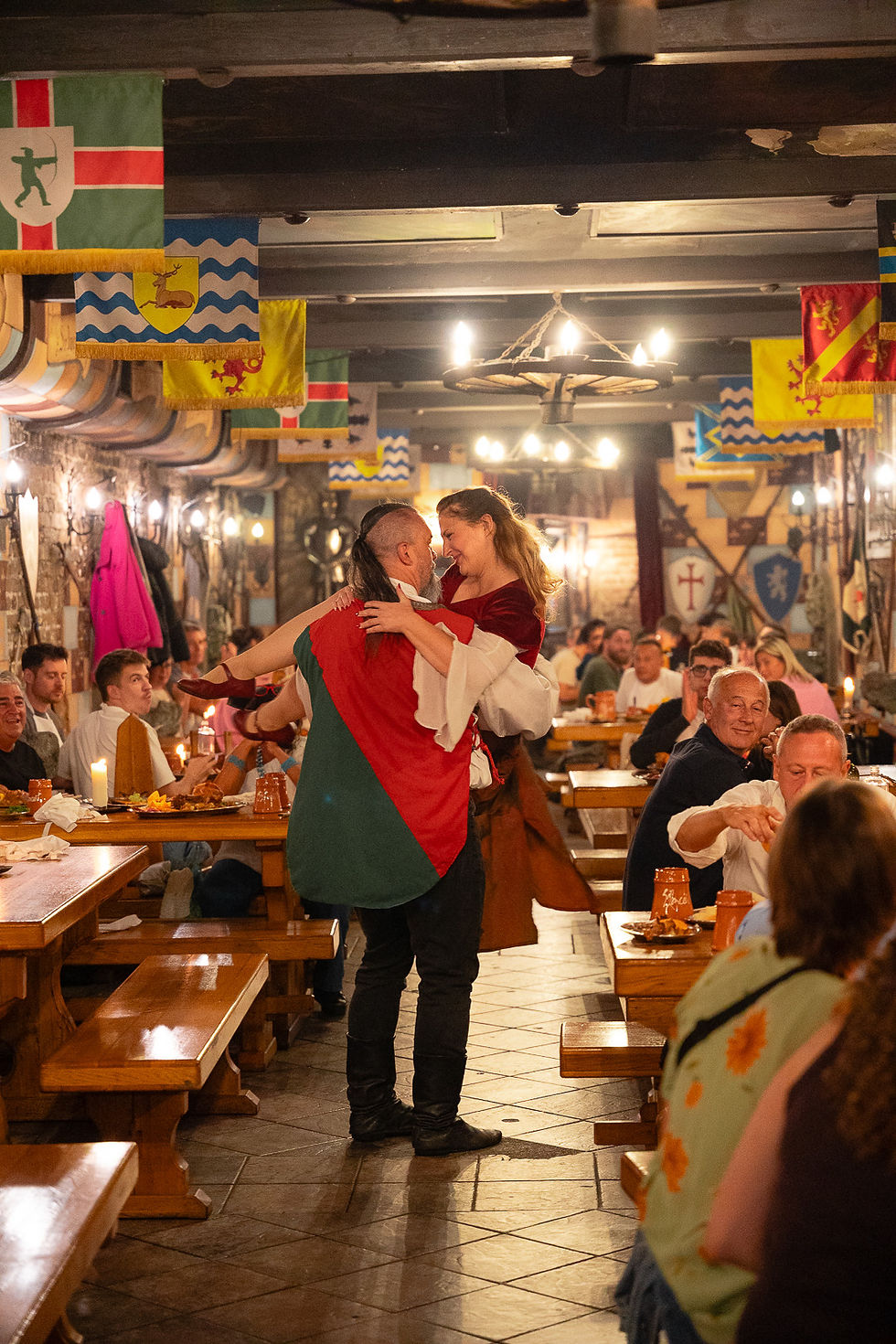
While looking for traditional Hungarian dining experiences, we came across Sir Lancelot Medieval Restaurant, and it turned out to be much more than just a meal. Set in a cave-like tavern with stone walls, wooden beams, and candle-style lighting, the place instantly transports you back to medieval times. The servers dress in period costumes, and the evening feels like a full-on show rather than just dinner.
We were seated in the middle of the hall, which made the experience even better as performances-like fire shows, sword fights, traditional dances, and live music, happened around us every 15 to 20 minutes throughout the evening (roughly 7–10 PM).

Every little detail inclduing what is served, how it is served, the price per person, the menu, the enertainment etc. is detailed in my blog post , yes a separate one, check it out:
Just know, that overall, it’s one of the most unique experiences in Budapest, where dinner truly feels like a memorable event.
Day 2 : Downtown Pest
Great Market Hall
We rightaway immersed ourselves in the bustling atmosphere of the Great Market Hall. The Great Market Hall is indeed great for under its roof is packed a plethora of shops and stalls dishing out various fresh produce, Hungarian specialties, and traditional crafts. If you want to buy your souvenirs or gifts to take back home to family and friends, great market is the place to be! Its one of the best places to visit for local food.
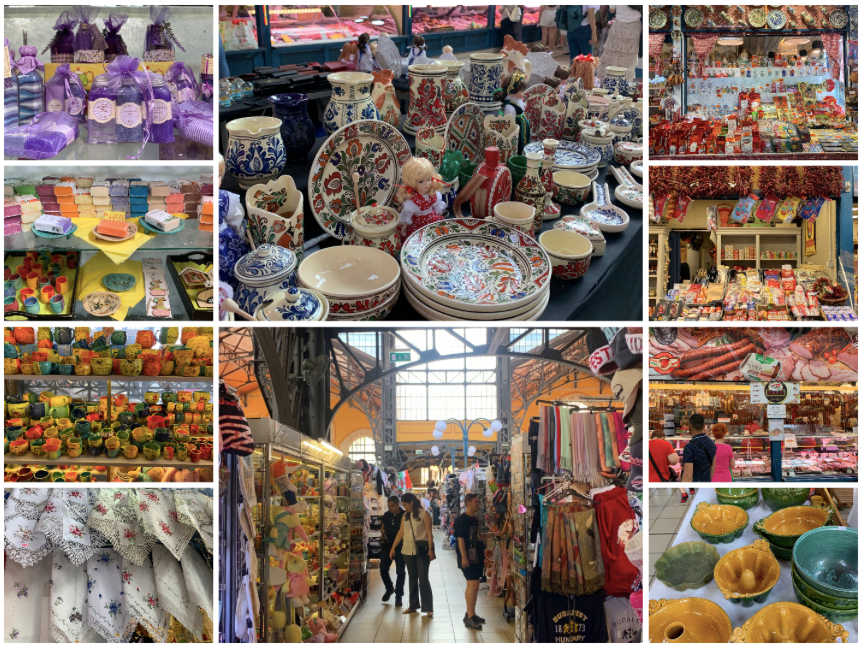
It’s very easy to reach using public transport, just take Metro M4 or tram 2, 47, or 49 and get off at Fővám tér, which is right next to the market. You can also take an Uber or Bolt, which is convenient and affordable. It is usually open Monday to Friday from 6:00 AM to 6:00 PM, Saturday from 6:00 AM to around 3:00–4:00 PM, and it is closed on Sundays
⭐⭐⭐Unique Find
One of the most unique (and delicious!) finds for us at the Great Market Hall was lángos, a popular Hungarian street food. It’s a deep-fried flatbread that’s usually topped with sour cream and cheese, but we were surprised to see so many creative versions, both savory and sweet, with toppings like chocolate, nuts, and even candies. Crispy on the outside and soft on the inside, it’s definitely something you shouldn’t miss while exploring Budapest.

You can also try lángos at this small but very popular spot on Kazinczy Street in the Jewish Quarter. This place may be simple and no-frills, but it’s known for serving some of the best lángos in Budapest.

⭐⭐⭐Unique Find
This is Tokaji wine, a famous sweet wine from Hungary made from special grapes from the Tokaj region that give it a rich, honey-like taste. The number on the bottle is a label for sweetness levels called puttonyos (the higher the number, the sweeter the wine). You can find it easily in Budapest at souvenir shops, supermarkets, wine stores, and places like the Central Market Hall.

Liberty Bridge
Later, we explored Liberty Bridge, which has a totally different vibe. The Liberty Bridge was built in 1896 to celebrate 1,000 years of Hungary. It was first called Franz Joseph Bridge, named after the emperor at that time. The bridge was heavily damaged during the war and rebuilt in 1946, after which it was renamed Liberty Bridge to reflect Hungary’s 'liberation' from Nazi occupation. If you want to spot it, its the pretty green bridge over the Danube. It’s free to walk across anytime, and if you go around sunset, it’s especially beautiful.

Váci Street
Váci Street is nearby and perfect for a relaxed stroll. One of Budapest’s most famous shopping streets, did you say shopping? Well, you’re in the right place. It’s lined with a mix of souvenir shops, local boutiques, and popular spots like Paprika Souvenir for Hungarian spices and gifts and Szamos Gourmet Ház for chocolates and sweets for dad to take back home. Ofcourse, I also spotted my favorites Zara and H&M. We picked up some lovely things like scarves, magnets, and clothes, because somehow, we couldn't leave that street empty-handed.
⭐⭐⭐Unique Find
Don’t miss the iconic Gerbeaud Café on Váci Street. Their coffee paired with a slice of Dobos cake is the perfect treat and will make your Budapest experience even sweeter. The café is open daily from 9 AM to 8 PM. Dobos cake, also called Dobostorta, is a layered cake made with thin sponge layers and chocolate buttercream. It was created in 1885 by József C. Dobos, who wanted to make a cake that would last longer than usual. He first presented it at the National General Exhibition of Budapest in 1885 in Budapest.

⭐⭐⭐Unique Find
While walking along Váci Street, the kids couldn’t resist stopping at Fitzkey Chimney Cake Shop. Watching them freshly bake the kürtőskalács (chimney cake) right in front of us was half the joy. We picked up a warm one straight from the counter, coated in sugar, and it was absolutely delicious, crispy on the outside, soft on the inside. The on coated with the cinnamon sugar is the best one! It’s one of those simple street food moments that really adds to the whole Budapest experience.

St. Stephen's Basilica
Our time in Budapest felt really special, especially visiting St. Stephen’s Basilica and walking across Liberty Bridge. The Basilica is such a grand and beautiful church right in the center of the city, named after Hungary’s first king. From the outside it’s impressive, but inside it’s even more stunning with all the detailed artwork and decorations. You can also go up to the top for amazing views of Budapest, there’s a small fee for that, while entry to the church itself is usually just a donation.

And if you’re visiting St. Stephen’s Basilica, you might also want to book your entry in advance to make things smoother, especially if you plan to go up to the dome for the views. Here’s a great option to consider: St. Stephen’s Basilica Entry Experience. These tours and tickets really helped us make the most of our time in the city!
Andrassy Avenue
Walking from Váci Street to Andrássy Avenue was an easy 15–20 minute walk (about 1–1.5 km) through the city center. Andrássy Avenue starts near St. Stephen’s Basilica (District V) and runs outward through District VI. Andrassy Avenue is an elegant and a beautiful boulevard lined with historic buildings and shops and is a UNESCO World Heritage site because of its beautiful 19th-century architecture, grand mansions, historic buildings, and its importance in showcasing Budapest’s urban development during the Austro-Hungarian Empire. It includes the State Opera House and the House of Terror Museum.

⭐⭐⭐Unique Find
If you get the chance, I highly recommend watching The Nutcracker at the Hungarian State Opera House. It’s one of the most famous and magical ballet performances, especially during the festive season, and the stunning setting of the Opera House makes the experience even more special. Even if you’re not usually into ballet, this one is truly worth it. Even if you don’t catch a show, the guided tour is worth it, you’ll learn about the building’s history, architecture, and even hear a short live performance during the tour.
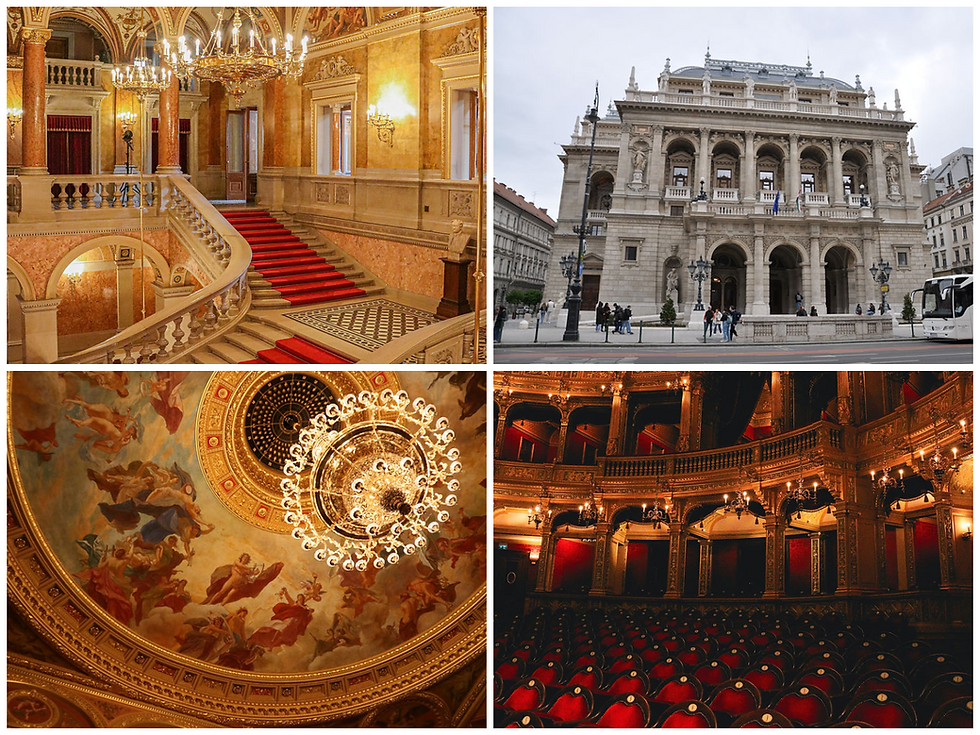
I highly recommend this Opera House guided tour. It’s a quick 1-hour experience that lets you explore the stunning interiors of the Hungarian State Opera House, learn its history, and enjoy a short live music performance at the end. Perfect if you don’t have time for a full show! BOOK HERE. |
📍Must-Visit Iconic Spot
Budapest's Hottest Nighltife Spots - Ruin Bars
Would You Party in an Abandoned Building? Lets explore..
That night we left our kids with our parents and dragged our sleepy selves out at 10:30 pm, an hour when, on most days, we’d already be deep asleep, but that night we had made a pact to experience Budapest’s legendary nightlife. What began as a struggle quickly melted away the moment we stepped into Szimpla Kert, the city’s most iconic ruin bar tucked inside the lively Jewish Quarter, just a short walk from the Dohány Street Synagogue. It wasn’t a club in the traditional sense but a chaotic, fascinating maze of dimly lit rooms, each with its own mood, one thumping with techno and electronic beats, another humming with indie or alternative music, a courtyard overflowing with dancers, and hidden upstairs corners for those seeking something different. The décor felt like an art installation built from forgotten objects, bathtubs turned into seats, mismatched chairs, graffiti everywhere, creating a space that was as much about exploration as it was about music.

Ruin bars are a big part of Budapest’s identity. After World War II and during the later communist era, many buildings, especially in the Jewish Quarter, were left empty and slowly fell into decay over time. A group of young locals saw potential in these run-down spaces and came up with a simple but creative idea: ruin bars. Instead of demolishing the buildings, they brought in second-hand furniture, added art, music, and lights, and turned them into unique, affordable places for people to gather and have a good time. One of the first and most famous examples is Szimpla Kert, which opened in 2002 and helped start this now-iconic trend.
Open from around noon until 2–4 am, Szimpla transforms through the day, but it truly comes alive after 10:30 pm, when the crowd thickens and the energy turns electric. As we moved from room to room, drink in hand, soaking in the madness, we realized something unexpected that night in the heart of Budapest that sometimes there are indeed things better than going to bed.
Day 3 : City Park (Pest Side) and Castle District (Buda Side)
The next day we commenced our vibrant day in Budapest by exploring the The City Park and then continuing towards the Buda side of Budapest, Hungary, which offers several notable attractions and landmarks worth exploring.
Heroes' Square
The Andrassy Avenue leads all the way to Heroes’ Square, which is at the edge of City Park (Városliget, District XIV). It is great to explore and take photos. It is an UNESCO World Heritage site, and spent some time wandering around and taking it all in. The square is massive and really impressive, with a beautiful semicircle of statues showing Hungary’s most important kings and historical leaders. At the center stands a tall column with Archangel Gabriel on top, holding the Hungarian crown. Basically, you are looking at the centerpiece of the entire Millennium Monument. The square was built in 1896 to celebrate 1,000 years of Hungary, which made learning about it even more interesting. We walked around, admired the details of the statues, and learned the stories behind them. The square also features the Museum of Fine Arts and the Hall of Art (a major contemporary art exhibition hall in Budapest) on either side.

I highly recommend this Heroes’ Square & City Park tour. It’s a great way to explore beyond the usual spots. Along with visiting beautiful landmarks and green spaces, the highlight is the live Hungarian music performance, which makes the experience feel really special and unique. BOOK HERE. |
City Park
We spent some time exploring City Park Budapest, one of the largest and most beautiful green spaces in the city. As we walked through, this stunning castle-like structure caught our attention. It’s actually Vajdahunyad Castle. The entrance with its towers and archways makes it a perfect photo spot.

City Park is great for a slow break from sightseeing, especially if you’re traveling with kids. There’s plenty of open space and they usually have a food market with kids' attractions.
📍Must-Visit Iconic Spot
Hungarian Parliament Building
We walked around the Hungarian Parliament Building and honestly, just seeing it from outside is already amazing. The building is huge and sits right next to the Danube, with beautiful Gothic-style details, tall spires, and a massive dome that you can spot from far away. It was completed in 1904 and is one of the largest parliament buildings in the world. Did you know? It has 691 rooms and 20 km of stairs inside! The USP is definitely its stunning riverside location and iconic architecture, especially when it lights up at night. If you want to go inside, guided tours usually run daily from around 8:00 AM to 6:00 PM (timings can vary), but even just walking around it is totally worth it.

📍Must-Visit Iconic Spot
Shoes on the Danube Bank
Very close to the parliament building is the 'Shoes on the Danube Bank' memorial. It was a bit emotional for us to see those shoes been implanted by the Danube. They were metallic no doubt and was a symbol of the revolution, but it still brought in some tragic memories of the Dachau concentration camp and Auschwitz concentration camp that we had visited in the past years. Those shoes appear ordinary at first, men’s boots, women’s heels, tiny children’s shoes but they are actually part of the memorial called Shoes on the Danube Bank in Budapest, created in 2005 by film director Can Togay and sculptor Gyula Pauer to commemorate the victims of the Holocaust.

There were shoes of little babies and children also implanted there as a memorial, and we couldn’t unsee what we saw. The memorial consists of about 60 pairs of iron shoes, modeled after real footwear from the 1940s to represent men, women, and children who were killed. It’s a reminder of the gory past, specifically the winter of 1944–45, when members of the Arrow Cross Party rounded up Jewish people along the riverbank, forced them to remove their shoes (as they were valuable), and then shot them so their bodies fell into the river.
It’s a reminder of the gory past and a lesson that history shouldn’t repeat itself. Historians estimate that thousands of Jews were executed along the Danube in Budapest, and overall, about 565,000 Hungarian Jews were murdered during the Holocaust. Those shoes were laid there by the Jewish community of Budapest and is a major memorial site often visited by locals and tourists alike, where respects are paid to the deceased, often through candles, flowers, and stones placed beside the shoes in quiet remembrance.
Széchenyi Chain Bridge
From the Pest side, we crossed the famous Széchenyi Chain Bridge to the Buda Castle District. The walk itself was beautiful, with amazing views of the Danube on both sides, the Castle Hill atop the hill and the stunning Hungarian Parliament Building moving away behind.

Buda Castle
The Buda Castle is perched beautifully atop Castle Hill. Getting there from the city center was quite easy. We crossed the Széchenyi Chain Bridge and took the funicular from Clark Ádám Square, which runs daily from around 8:00 AM to 10:00 PM and costs about €11–14 depending on whether you choose a one-way or return ticket. You can also take an Uber/Bolt for around €5–10 or simply walk up if you’re up for a bit of a climb.

The castle complex itself is vast and full of history. The Royal Palace, once home to Hungarian kings, now houses museums like the Hungarian National Gallery, which showcases Hungarian art and is open Tuesday to Sunday from 10:00 AM to 6:00 PM (tickets around €5–7). Nearby, the stunning Matthias Church, known for its colorful tiled roof and rich history, is open roughly from 9:00 AM to 5:00 PM with entry costing about €3–4 (extra for the tower). Parts of the Royal Palace interiors, like St. Stephen’s Hall, cost around €12 to visit.
We spent time wandering through the terraces and courtyards, which honestly one of the best viewpoints in all of Budapest, and the best part is that exploring the castle grounds themselves is completely free.
⭐⭐⭐Unique Find
The below image is the beautiful fountain in front of Buda Castle, known as the Matthias Fountain. The fountain sits right within the castle complex on the Buda side and is a popular spot for photos. It’s often called the 'Trevi Fountain of Budapest' because of its grand design. It is a sculpture showing King Matthias on a hunting trip, surrounded by figures and animals.

Matthias Church and Fisherman’s Bastion in the Castle District
This is Matthias Church along with Fisherman’s Bastion in the Castle District on the Buda side.
The colorful tiled roof you see belongs to Matthias Church, while the white towers and arches in the background are part of Fisherman’s Bastion. The statue in the center is of King Stephen on horseback, Hungary’s first king. It’s one of the most picturesque and historic spots in Budapest, with amazing views and beautiful architecture all around.

We visited Fisherman’s Bastion and marvelled at this neo-Gothic architectural beauty of Fisherman's Bastion. We walked around its beautiful white towers and terraces. It was a really nice spot to relax, take photos, and enjoy the view of Budapest. It’s called 'Fisherman’s Bastion' because, in the Middle Ages, this part of the city walls was protected by a guild of fishermen. The structure you see today was built in the late 1800s for Hungary’s 1,000-year celebrations, and its seven towers represent the seven Magyar tribes who founded Hungary.
⭐⭐⭐Unique Find
Százéves Étterem, the '100-Year-Old Restaurant'
Dinner was at Százéves Étterem, also known as the '100-Year-Old Restaurant'. It is the oldest restaurant in Budapest, opened in 1831 in the heart of the city. The building itself dates back to 1755 and is one of the few remaining examples of Baroque architecture in Pest. Today, it is known not just for its traditional Hungarian food, but also for its live music. However, when we visited, we were seated in an inner room and couldn’t really see or enjoy the live performance, which was a bit disappointing since we had made the reservation specifically for the music, ambience, and overall experience. Still, dining there felt like stepping back in time.

If you’re visiting this place, go in ready to try some proper Hungarian classics. The goulash soup is probably the most famous and a must-try, rich, comforting, and full of paprika flavor. You’ll also find dishes like chicken paprikash, a creamy, paprika-based chicken dish served with dumplings, which is one of Hungary’s most traditional meals. The schnitzel (breaded cutlet) is another popular choice. If you’re feeling a bit adventurous, dishes like duck breast or goose liver (foie gras) are also commonly recommended and very Hungarian in style.
For dessert, don’t miss something classic like Gundel pancakes or sweet dumplings, they’re rich, creamy and the perfect way to end the meal. Overall, the menu is very traditional, hearty, and meat-heavy, giving you a real taste of Hungarian cuisine.

Day 4: Gellert Hill (Buda Side)
We kept Gellért Hill for our last day, thinking it would be the perfect way to end the trip with some relaxing views. You can get there easily by walking up from the Gellért Thermal Bath area, or take a bus part of the way and then walk a short distance to the top.
Gellért Hill is one of the best viewpoints in Budapest. It’s a bit of an uphill walk, but once you reach the top, the views are absolutely worth it, you can see the Danube, the bridges, and both Buda and Pest spread out beautifully. A perfect ending to the trip.
📍Must-Visit Iconic Spot
Thermal Baths in the 'City of Spas' - Gellert or Széchenyi
This thermal bath completely changed what a “normal pool” feels like for us! Gellért Thermal Bath is something else, so beautiful and historic, it honestly feels like stepping into another era. The whole place is inside a stunning Art Nouveau building with colorful tiles, stained glass, and grand pillars. There are different pools to try, some warm and relaxing around 36–38°C, plus cooler pools and even a plunge pool if you’re feeling brave. With saunas, steam rooms, and quiet spaces to just sit and relax, it easily turns into a half or full-day experience, honestly, wow, wow, wow!
Gellért Thermal Bath opened in 1918 and is one of the most iconic baths in Budapest. The thermal water comes from natural hot springs in the Buda hills and is rich in minerals that are believed to help with muscles, joints, and circulation.

Budapest is often called the 'City of Spas' because it sits on a network of over 100 thermal springs, a tradition that goes back to Roman times and was later developed further during the Ottoman era. The baths aren’t just about relaxation, they’re believed to have real health benefits, especially for joints, muscles, and circulation.
Practical info: The baths are usually open daily from around 9:00 AM to 7:00 PM. Try to go early or later in the day to avoid crowds. Bring swimwear, flip-flops, and a towel (you can also rent them there). Lockers or private cabins are included depending on your ticket. Entry is usually around €25–€35 per person, with extra charges for massages and treatments. |
I highly recommend visiting Széchenyi Thermal Bath. It’s the perfect place to relax in warm outdoor pools and experience one of Budapest’s most iconic spa traditions. BOOK HERE. |
If you still want a similar experience in Budapest right now, people are visiting:
|
Note: Gellért Thermal Bath is currently closed for renovation (since October 2025) and is expected to reopen around 2028.
Cave Church
Just about a 4-minute walk from Gellért Thermal Bath is the Gellért Hill Cave, a small church built inside a natural cave on the hillside. This church features intricate rock formations and religious statues. We decided to check it out and took the short guided tour. The cave itself is interesting, with simple interiors, a small altar, and a peaceful, quiet atmosphere. It’s run by Pauline monks and has some religious history tied to it, which adds context to the visit.
That said, unless you’re particularly interested in religious sites or history, this is something you could skip. It’s not very large and doesn’t take long to see, and compared to Budapest’s grand churches and landmarks, it feels quite modest.

Citadella & Liberty Statue
We didn’t get time to visit the Citadella and the Liberty Statue, but if you have the time, I’d definitely recommend exploring it. It’s about 15–20 minutes away from the thermal baths and is located on Gellért Hill.

The Citadella is a historic fortress built in the 19th century, and right next to it stands the Liberty Statue, one of Budapest’s most iconic landmarks. The statue represents freedom and was erected after World War II. What makes this spot really special is the panoramic view, you get one of the best views of the entire city, including the Danube, bridges, and both Buda and Pest sides all at once.
⭐⭐⭐Unique Find
Dinner at the Most Beautiful Cafe in The World - New York Cafe
I don’t know if it’s the most beautiful café in the world, because honestly, I haven’t explored every café out there, but I’ll go with what tourists, locals, and social media seem to agree on. The famous New York Café is undeniably stunning, grand, elegant, and dripping in old-world charm, but the hype? It’s a bit much, to be honest. In today’s social media age, it’s been so overexposed that people are willing to stand in line for 1–2 hours just to get a table, often ordering just a coffee for a quick photo and Instagram post.

Knowing this, I read up in advance and decided to avoid the chaos by reserving a table for dinner instead. We reached fairly early, around 5:30 pm, which turned out to be perfect, we could actually take in the interiors and soak in the ambience before it got crowded. And what a place it is! The café feels like stepping into a palace, with high frescoed ceilings, golden details, chandeliers, and intricate artwork everywhere. There’s a grand dining hall downstairs filled with tables, and upstairs, a gallery-like level with long corridors, paintings, and statues, it honestly feels like a royal mansion.
And that’s not far from the truth. The building originally opened in 1894 as part of the New York Palace, built by the New York Life Insurance Company. It quickly became a hub for writers, artists, and intellectuals, many even considered it their 'office.' Over time, it earned the reputation of being the 'most beautiful café in the world' because of its opulent design and cultural importance in Budapest’s literary life. Their goulash, desserts, hot chocolate and coffee are definitely a must try.
Practical info: The food is definitely on the expensive side, but also genuinely delicious, expect to pay around €50–€80 for two people, while even a simple cappuccino costs about €6–€8. The café is open daily from 7:00 am to midnight on weekdays and until 1:00 am on weekends, making it easy to visit anytime from breakfast to a late dinner. Located on Erzsébet Boulevard in central Pest, it’s easy to reach, but the real tip is to plan ahead, book if you can, go a little early, and come for the experience rather than just the coffee, because despite the hype, the setting truly is something special. |
Final Thoughts
Budapest truly surprised me in the best way. While you’ll find plenty of typical itineraries out there, it’s the unique finds—the hidden streets, ruin bars, local food spots, and unexpected experiences, that really made this trip special for me. What I loved most is how versatile the city is, you can soak in history, relax in thermal baths, explore with family, and still enjoy its buzzing nightlife. It’s one of those cities that gives you a little bit of everything, and somehow still leaves you wanting more.
I’ll leave you with this little gem we stumbled upon on Váci Street, definitely one of our favourite unique finds. Quirky interiors, hanging pots everywhere, cozy old-world vibes, and food that absolutely hits the spot.
Now I’m curious… can you guess which place this is? 😉



Comments