


What to Expect in Assam: Kaziranga Safaris, Guwahati Temples and Assamese Food

Hey there! As you read through this post, feel free to click on the affiliate links highlighted in BLUE. If you decide to book a hotel or purchase something through them, I’ll earn a small commission, at no extra cost to you. These commissions help keep The Morning Brew running and allow me to create more awesome content. Thanks for your support!
Kaziranga National Park is truly one of the greatest wildlife destinations in India and a place that every nature lover should experience at least once. Located in the beautiful floodplains of the Brahmaputra River in Assam, it is around 200 km from Guwahati. The park was originally protected in 1908 after the sharp decline of rhinos, later became a sanctuary, then a national park in 1974. Kaziranga National Park is one of the most famous places in the world to see the Indian one-horned rhinoceros in the wild. It is home to the largest population of these rhinos and was declared a UNESCO World Heritage Site in 1985.

Kaziranga covers around 430 sq km as a national park, while the larger reserve landscape spreads across nearly 2,600 sq km. As of 2025, strict anti-poaching protection and continuous conservation efforts have helped increase the rhino population to around 3,000, while tiger numbers have risen to about 148. It is also home to huge populations of wild water buffalo, hog deer, swamp deer, elephants, and countless bird species, making it one of the richest wildlife habitats in Asia.
Unlike many places in Africa where rhino sightings can be rare due to vast landscapes and poaching concerns, Kaziranga offers some of the best rhino sightings anywhere in the world. Here, it is common to see multiple rhinos grazing in open grasslands, relaxing in wetlands, or walking proudly across safari tracks under the protection of forest guards and rangers.
The most famous rhinos here are usually the giant solitary bull males often seen in the Bagori (Western) and Kohora (Central) ranges, as they have become symbols of Kaziranga itself. The oldest rhinos in the park are experienced adult bulls and breeding females that may live up to 35-40 years, while the youngest are newborn calves walking closely beside their mothers, always one of the sweetest sights during a safari.
Every year, Kaziranga attracts several lakh visitors from all across India and from countries like the United Kingdom, United States, Germany, France, Japan, Australia and many more. Wildlife photographers, birdwatchers, researchers, and travelers from around the world visit this park every year.
Table of Contents: What to Expect in Assam: Kaziranga Safaris, Guwahati Temples and Assamese Food Kaziranga Safari Zones How to get to Kaziranga? Best Time to Visit Kaziranga Prelude Accommodation Safari and Stay Costs Day 1: Arrival in Kaziranga Day 2: Elephant Safari, Orchid Park & Jeep Safari in Western Range Day 3: Afternoon Jeep Safari in Central zone Kohora Day 4: Morning Jeep Safari in Central Zone Kohora and Return Journey to Guwahati Day 5: Kamakhya temple visit and Local shopping for Assamese products Closing Thoughts |
Kaziranga has four main tourist Safari Zones
Kohora Range is the Central Range and one of the most popular for rhino sightings, scenic views, and occasional tiger movement. Bagori Range in the Western side is often considered the best for first-time visitors because of excellent chances to spot rhinos, elephants, buffalo, and deer in open grasslands. Agoratoli Range is the Eastern Range, especially famous for birdwatching and wetlands, while Burapahar Range is more forested and peaceful, ideal for nature lovers.
Jeep safaris usually run in two slots, morning around 7:00/7:30 AM to 9:30/10:00 AM, and afternoon around 1:30 PM to 3:30/4:00 PM, depending on season and weather. Each safari lasts around 2 to 2.5 hours. If someone has only one day, the best combination is usually Bagori in the morning and Kohora in the afternoon for the highest chance of seeing maximum wildlife.
Kaziranga is not just a national park, but a symbol of successful conservation and the pride of Assam. I highly recommend visiting because it is one of the very few places in the world where you can see the majestic one-horned rhinos in the wild. Not many people outside India know about this incredible destination, and it deserves far more recognition. By spreading the word, supporting conservation efforts, and encouraging responsible tourism, we also help create livelihoods for local communities who depend on tourism for their income.
Fact: Every year during the monsoon, floods from the Brahmaputra River submerge parts of Kaziranga, forcing many wild animals, including rhinos, to move to nearby villages and higher areas for safety. For local villagers, this is a fairly common seasonal occurrence, and many people are used to seeing animals pass through during flood time, though they remain cautious and alert. Although the floods can seem dangerous, they help keep the grasslands healthy by depositing fresh, nutrient-rich soil across the park every year. This supports the growth of tall elephant grass and wetlands that animals like the one-horned rhino, wild buffalo, and deer depend on for food and shelter.
How to Get to Kaziranga?
Kaziranga is in the state of Assam in the north eastern part of India. It is 217 kms (135 miles) away from the capital city of Guwahati. Kaziranga is roughly in the middle of Assam. To the west is Lokpriya Gopinath Bordoloi International Airport in Guwahati, around 5 hours away by road. To the east is Dibrugarh Airport in Dibrugarh, also about 5 hours away, though it has fewer domestic flight options.
By train, the closest major railway station is Furkating Junction Railway Station, around 1.5–2 hours from Kaziranga, while Guwahati Railway Station is the best-connected option for most travelers. From either station, taxis and private transfers are easily available to the park.
Flight and Transfer Details
To reach Kaziranga from Mumbai, we took a direct flight with IndiGo to Guwahati Airport, which made the journey comfortable and quick. Upon arrival at the airport, we had a smooth transfer arranged by Habitas Rhino, our forest lodge, which provided a pick-up service directly from the airport. The drive from Guwahati to Kaziranga is about 4.5 hours, and it offers a scenic route, which made the journey even more enjoyable. The well-organized transfer allowed us to relax and start our adventure without any hassle.
Taxi service
You can easily arrange a car with a driver directly through the lodge. If you’re travelling in a bigger group, they can also provide larger vehicles for a more comfortable journey.
Our pick-up options from Guwahati to Kaziranga were:
Swift Dzire – ₹6,500 (approx. $75 USD)
Innova – ₹9,500 (approx. $110 USD)
Tempo Traveller – ₹15,000 (approx. $175 USD)
Urbania – ₹18,000 (approx. $210 USD)
The drive from Guwahati to Kaziranga takes around 4–5 hours depending on traffic and road conditions.
Best Time to Visit Kaziranga
If you’re planning a trip to Kaziranga, the peak tourist season is generally from December to February, when the weather is cooler and more comfortable for safaris. Most safari zones remain open from around November to April, while the park usually closes during the monsoon months because of flooding from the Brahmaputra River. April can still be a great time to visit if you prefer fewer crowds and don’t mind slightly warmer temperatures before the monsoon arrives.
We had spring holidays in the Netherlands, so we decided to visit Kaziranga in April, towards the end of the safari season. The weather turned out to be perfect overall, although we experienced one morning of heavy rain, the rest of the days were dry and sunny. The grasslands were still lush and beautiful, and wildlife sightings were quite active, especially around water bodies and open areas.
Prelude to the Kaziranga Safaris, Guwahati Temples and Assamese Food
One wouldn’t willingly choose a 5 a.m. flight to Guwahati, the kind that completely wrecks one’s sleep, but we had to and we did. For starters, let’s blame IndiGo, who changed our perfectly planned 9:30 a.m. flight to this horrendous hour. Yes, we had other options like Air India Express and Akasa, but the return timings on those were equally unfriendly, while IndiGo offered a much better evening slot. So yes, due diligence was done. Armed with four kids and the enthusiasm of two families determined to do a safari together, we decided to take the plunge and not overthink it.

We hailed our cabs to the airport and decided not to complain too much about it. After all, once we landed in Guwahati, we still had a six-hour road trip ahead to Kaziranga National Park. That, we told ourselves, would be the perfect time to catch up on the sleep we had sacrificed so bravely.
Accommodation
Habitas Rhino by Nature Hunt in Kaziranga
We approached Habitas Rhino safari lodge as they were the ones which seemed perfect for our criteria of safari lodges. Our main priority was to stay at a place with a great location close to the core safari zones, one that provided an expert naturalist, was highly rated by fellow travellers, and truly felt connected to the wildlife experience. While there are other ultra-luxurious properties in Kaziranga, we were not really looking for just a fancy resort with high-end interiors and unnecessary frills.

Habitas Rhino stood out because of its location in the Diring Tea Estate area of Kohora, Kaziranga, which gives the property a peaceful natural setting while still being conveniently close to the park. One of the biggest advantages of the property is its proximity to Kaziranga’s Central (Kohora) Range, which is the most popular and accessible safari zone. Being close to the park meant early morning safari departures would be easy and convenient, which was far more important to us than anything else.

The lodge does not have its own luxury safari vehicles, but they arrange jeep safaris, park entry, transport, and local trips for guests, which made everything very easy and stress-free for us. They also provide tuk-tuk rides to the orchid park and nearby places. With only 14 bamboo cottages, the property feels small, peaceful, and close to nature. The cottages have a simple rustic charm and feel more like a real safari stay than a big luxury hotel.
The property also has a restaurant, reception area, and a nice chai point with beautiful views of the tea gardens. It does not have spa or massage services on-site, but these can be arranged at nearby properties if you’re looking for a more relaxing wellness experience during your stay. We cared more about the peaceful atmosphere and natural setting. They have all-inclusive package for the room categories booked, but the restaurant offers extra food options as well. Overall, we felt Habitas Rhino gave great value, and the staff were very friendly and helpful throughout our stay.
The other known properties in the area include Red River Retreat, Diflu lodge.
The Guwahati Address in Guwahati
We stayed a night at The Guwahati Address, located at Zoo Tiniali on RG Baruah Road, one of the prime areas of Guwahati, and absolutely loved the warm, elegant vibe of the hotel. The rooms were very cozy and thoughtfully designed, and the bathrooms felt especially spacious and luxurious.

The tariff is usually around ₹5,000–₹8,000 per night depending on the season and room type, and it honestly felt worth it for the comfort and experience. Other well-known 4 and 5-star hotels in Guwahati include Vivanta Guwahati, Radisson Blu Hotel Guwahati, Novotel Guwahati GS Road, and Mayfair Spring Valley Resort.
Safari and Stay Costs
For anyone planning a Kaziranga trip, here’s a rough idea of the costs for 2 persons.
At Habitas Rhino Lodge, Kaziranga, the room tariff is approximately ₹15,000 per room per night (≈ $180 USD) on double occupancy, inclusive of breakfast and 2 safaris per day.
Approximate safari costs:
Private jeep safari: approximately ₹4,000 per safari (≈ $50 USD)
Elephant safari (Western Range): approximately ₹2,000 per person (≈ $25 USD)
Approximate transport costs from Guwahati to Kaziranga:
Sedan with driver: ₹10,000–12,000 (≈ $120–$145)
Tempo Traveller: ₹15,000 (≈ $180)
Urbania: ₹18,000–22,000 (≈ $210–$265)
Other approximate expenses:
Stay at The Guwahati Address Hotel (1 night): ₹6,000–7,000 per room (≈ $70–$85)
Traditional folk dance program at Orchid Park: ₹500 per person (≈ $6)
Overall, a 2-person trip at Habitas-style luxury typically comes to around ₹35,000–45,000 (≈ $420–$540) depending on safaris and transport choices.
For comparison, Diphlu River Lodge and Red River Retreat are more premium, all-inclusive safari lodges. These properties usually include accommodation, all meals, guided safaris, park fees, and a naturalist. Based on seasonal rates, costs are typically:
Diphlu River Lodge: around ₹24,900 per person per night (≈ $300 USD), or about ₹1.1–1.25 lakh (≈ $1,400–$1,500 USD) for 2 people over 2 nights
Red River Retreat: around ₹22,000–₹30,000 per night per room for 2 people (≈ $265–$360 USD), or roughly ₹60,000–₹85,000 total (≈ $720–$1,020 USD) for 2 nights
These higher-end lodges are more expensive, but they offer a fully curated wildlife experience with expert naturalists, seamless safari arrangements, and very close access to the park.
In short, Habitas gives a luxury-but-more-flexible experience, while Diphlu and Red River Retreat are true immersive safari lodges where everything is taken care of end-to-end.
Day 1: Arrival in Kaziranga
We landed in Guwahati, often called the gateway to Northeast India. The first thing you set your eyes on from the plane windows is the mighty Brahmaputra River surrounded by rolling hills. Guwahati is also the largest city in Assam, home to over a million people, with a diverse mix of communities from across the Northeast. Assamese is the most widely spoken language, though Hindi, Bengali, English, and several indigenous languages are commonly heard, reflecting the multicultural spirit of the region.

From there, we took a 5-hour drive to Kaziranga, one of India’s oldest national parks. The drive was extremely scenic with tea plantations, coconut trees lining the main highways, greenery till the eyes could see, and roads that were wide and covered on both sides with lush green.
Anuraag Dhaba near Nagaon
Sleep deprived, we caught on some much deserved sleep, but soon we had to alight for our much deserved lunch as well. The lodge had recommended a few options on the highway, of which Anuraag Dhaba, located on NH-37 near Nagaon, seemed to be the best in terms of high ratings, 10k+ reviews, and exceptional food quality. We were a bit overwhelmed when we entered as it seemed like a low-grade kind of setup. Our first impression of the ambience wasn’t great, it was a very modest place and we were slightly worried about getting a stomach bug considering the hygiene levels.
They have a very no-frills menu consisting of a veg thali with tita kerela bhaji (bitter gourd fry), aloo pitika/jool (potato curry), sorsori chutney (mustard chutney), rice, begena torkari (brinjal curry), moong dal (yellow lentil curry), and bootor dal (chana dal curry), along with the option of mas bhaja (fried fish), masor jool (fish curry), kukura mangxor jool (chicken curry), or mangxor jool (mutton curry) to add to it. They also served chapatti, puri, and mishti doi with rasgulla on request. True to its word, the food was exceptional, and the service too exceeded expectations.
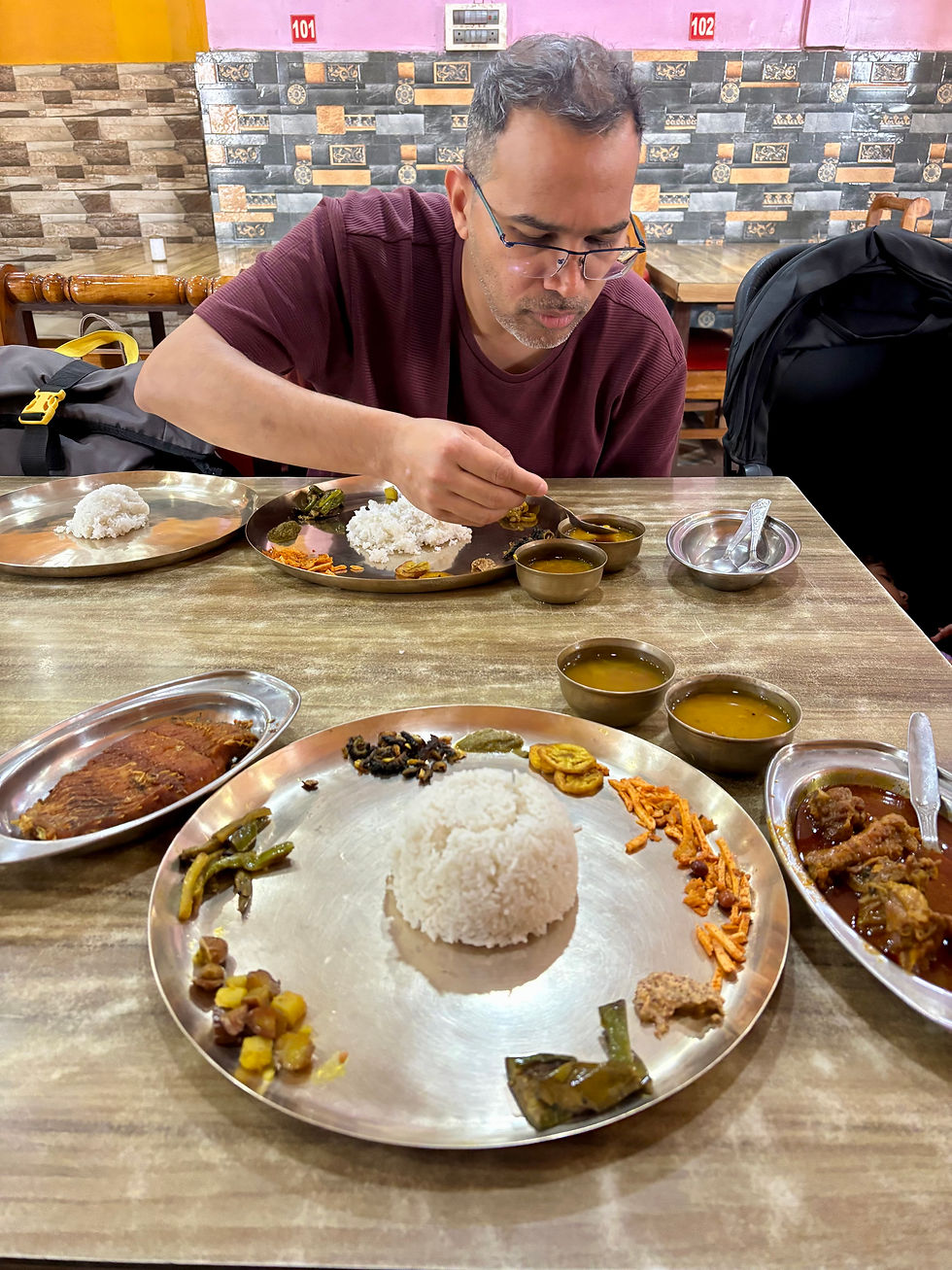
After a hearty lunch and finally feeling good about our decision to stop at Anuraag Dhaba, we furthered along on our journey to Kaziranga. Soon the scenery changed to include dense jungles and sudden open landscapes scattered with pink and purple water hyacinths. The Kaziranga animal corridor had officially started, and this was when we were still about 1.5 hours away from the national park. You can already spot the one-horned rhino and elephants in plethora. If lucky, you may also get to see the hornbill and fish eagle perched on those dense trees.
Burhi Ma Mandir
You will also cross the very famous Burhi Ma Mandir, a revered roadside shrine where many travellers stop briefly to seek blessings for a safe onward journey through the wild corridor. It holds deep local faith and is considered especially sacred by those traveling this route.
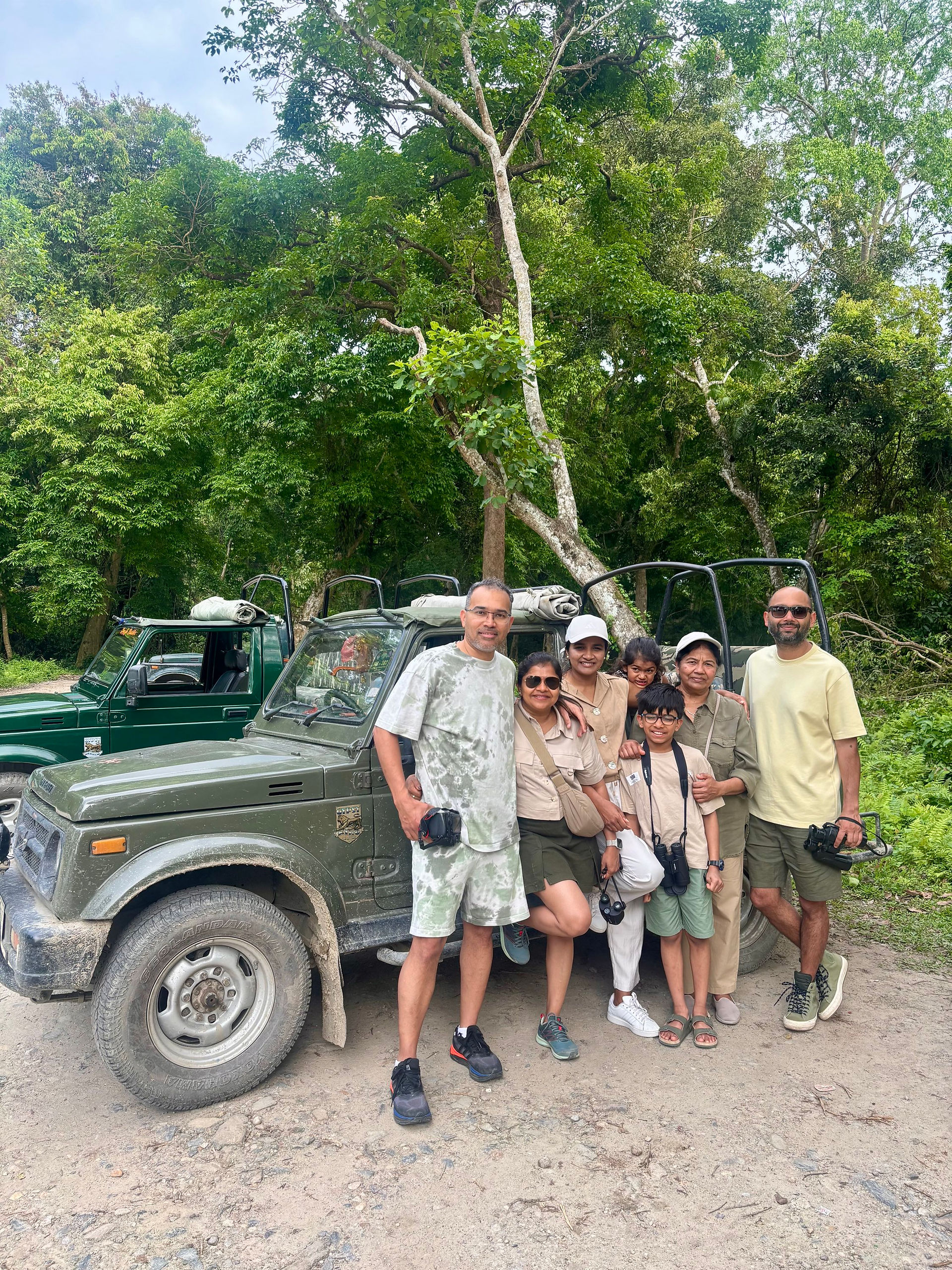
We soon reached Habitas Rhino by Nature Hunt, a cozy lodge surrounded by greenery. We checked in and after freshening up, we met at the restaurant for tea and snacks. We met our naturalist Auwick who was arranged by the lodge and discussed our plans with him for the next two days, awaiting the thrill of what lay ahead.
Kaziranga Orchid Park Culture Program
The cultural program at the Kaziranga Orchid Park itself is a vibrant showcase of Assam’s rich heritage, blending folk, traditional, and tribal dance forms from different communities across the state. Performances typically include energetic Bihu dances, bamboo dances, tea-tribe performances, and other regional folk traditions that reflect Assam’s diverse ethnic culture. The show runs from around 6:30 PM to 8:30 PM and keeps the audience thoroughly engaged throughout.

What made the evening especially memorable for us was the spirit of the performers. There were a few unexpected power cuts during the show, yet the dancers continued with incredible enthusiasm and professionalism. Each time the lights returned, the audience erupted into applause and encouraged them to carry on with even more energy.
The park itself is run as a community-driven initiative that supports local artisans, farmers, and cultural preservation efforts. Considering the scale of the performances, live music, costumes, and maintenance involved, the entry fee of around ₹500 per person felt worthwhile for the experience.
Overnight stay in Kaziranga at Habitas Rhino.
Day 2: Elephant Safari, Orchid Park & Jeep Safari in Western Range

Elephant safari at Western range
We woke up at 4 am, excited and ready for our very first jungle experience in Kaziranga National Park. The early start, the darkness outside, and that feeling of heading into the wild before sunrise made it all feel incredibly special.
We began with the much talked about Elephant safari at the Western Range, Bagori. Honestly, it felt a little overhyped at first. The entrance was crowded, chaotic and not very well managed. There seemed to be fewer true wildlife lovers and more tourists simply there for the novelty of it. The allocation of riders onto elephants also felt random, which was frustrating because you can end up with people who don’t understand the quiet discipline and respect the forest demands.
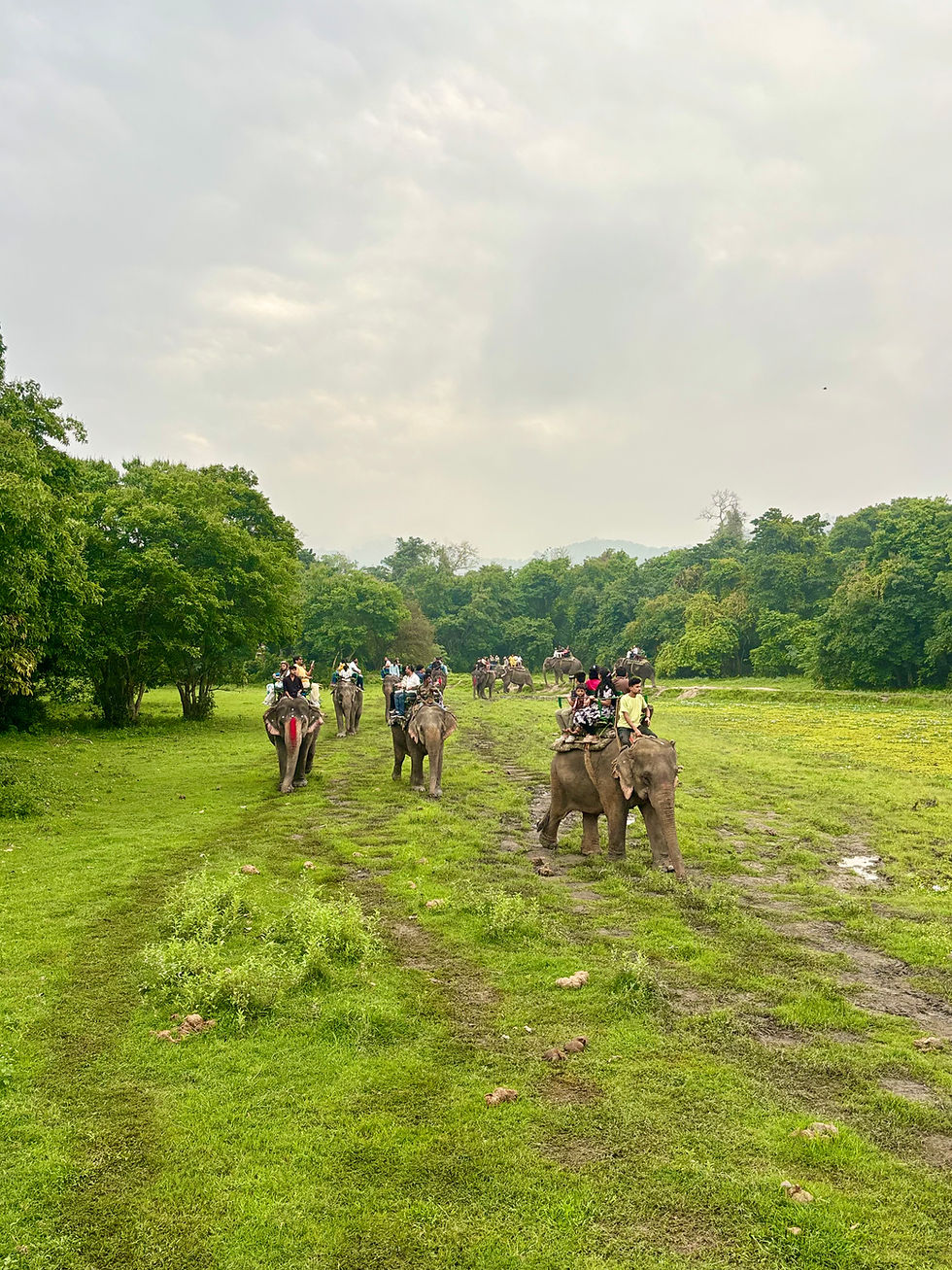
But once we moved away from the crowd and entered the grasslands, everything changed. The noise faded, the morning mist lifted slowly, and suddenly we were in the real Kaziranga. Riding silently through the tall grass on elephant back gave us a completely different perspective of the jungle.
We spotted hog deer darting gracefully through the fields, the majestic Eastern swamp deer (barasingha) standing alert in the wetlands, powerful wild water buffaloes grazing in the distance, and a few wild boars moving through the undergrowth. High above us, a vulture circled the open skies, adding to the rawness of the landscape. And of course, the thrill of being in rhino country, surrounded by such rich wilderness, made the whole morning unforgettable.
So while the organisation at the start left a lot to be desired, the forest itself more than made up for it. Once Kaziranga reveals itself, all the irritation disappears and you’re left with nothing but awe.

There are also elephant safaris at the Central Range of Kaziranga National Park, but availability often seems more limited, and visitors are sometimes told foreign tourists receive priority or reserved slots. If true, it can feel unfair, as Indian nationals should also have equal opportunity to experience their own wildlife heritage.
Kaziranga National Orchid and Biodiversity Park
We decided to pay a visit to The Kaziranga National Orchid and Biodiversity Park the same morning at 10 am after our hearty breakfast, so that we could be back in time for our lunch at 12:30 pm and then continue with our first safari. It is located near Kaziranga National Park in Assam, close to Bokakhat. You will be delighted by the vast variety of orchids and other beautiful flowers spread across this vibrant park. This morning’s visit to the Kaziranga National Orchid and Biodiversity Park became even more special because of the two people who guided us through it so brilliantly, Pavan, who took us through the orchidarium, and Jirjar, who explained the Assam museum section. Honestly, both were fabulous guides. Full of knowledge, passionate about what they do, and the kind of people who make a place come alive. Instead of just walking through displays, we actually understood what we were seeing because of them.
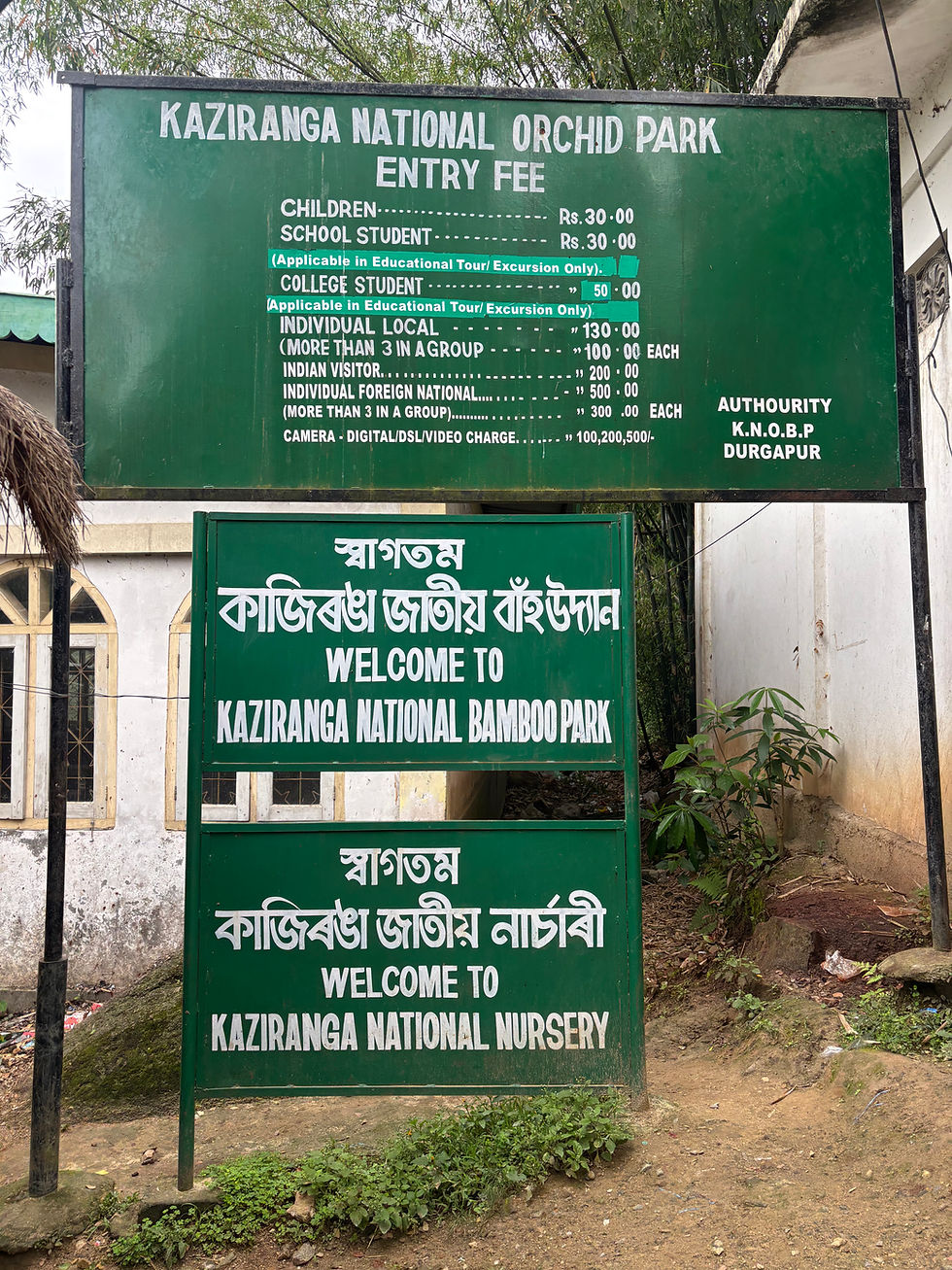
Pavan’s orchid tour was fascinating. I had no idea the orchid family is one of the largest flowering plant families in the world, with around 28,000+ accepted species globally and countless hybrids created by growers. He explained how Northeast India is one of the richest orchid belts in the country, which is why this park is so important. One flower especially close to Assam’s heart is the Kopou Phool, the state flower of Assam and deeply linked with Bihu celebrations.

Another lovely orchid we spoke about was the Lady’s Slipper Orchid, found in the Meghalaya region and famous for its pouch-shaped bloom that looks like a tiny slipper. It is one of the most unusual and beautiful orchids in the world. We also learnt about the vanilla plant, which is actually an orchid too.
Then came the museum section with Jirjar, and that was equally impressive. Assam is incredibly diverse, home to many ethnic communities and languages. Exact numbers vary depending on how tribes, sub-tribes, dialects and communities are counted, but it is widely recognised as one of India’s most culturally diverse states. Jirjar spoke about communities such as the Bodo, Mising, Karbi, Rabha, Tiwa and many others. Their traditional clothing, ornaments, tools, household items and musical instruments were displayed beautifully, giving a glimpse into how rich and layered Assamese culture really is.
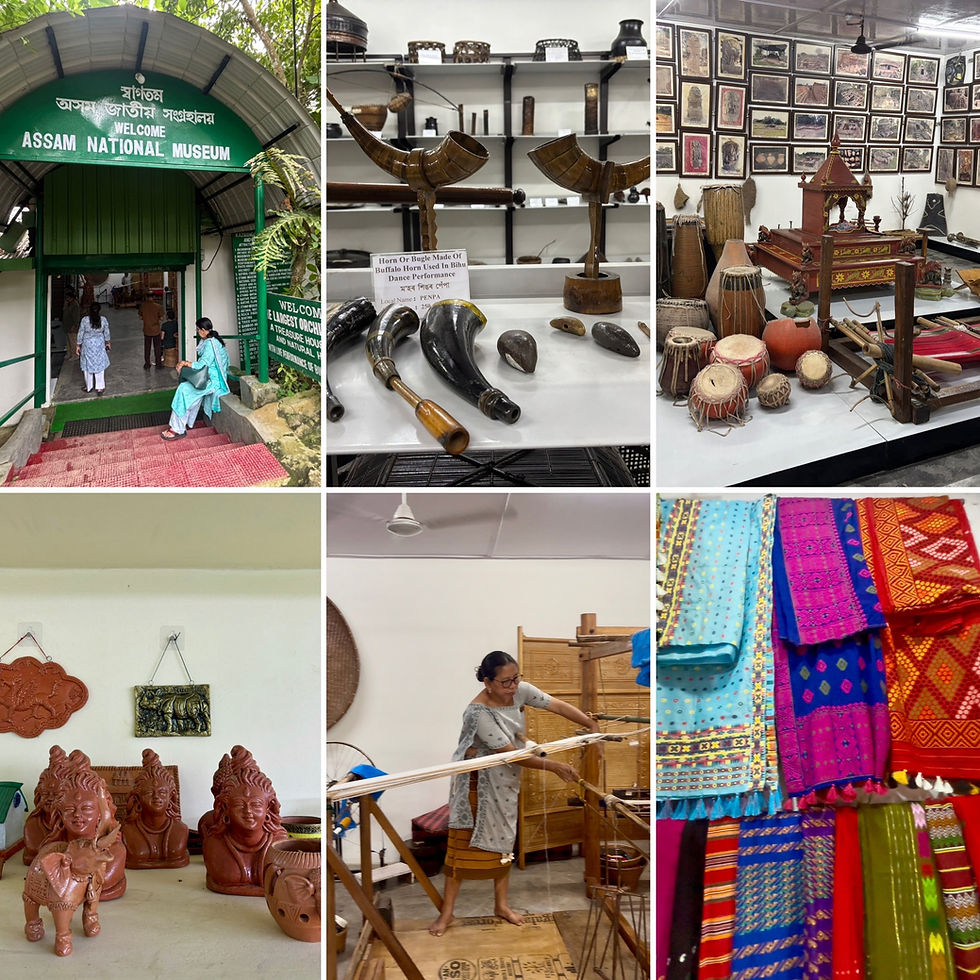
I especially loved seeing the handwoven textiles and traditional garments. Every tribe seemed to have its own colours, motifs and weaving identity. It reminded me how much heritage still survives through craft.
The terracotta section was another favourite. Beautiful handmade clay work everywhere, rustic, artistic and full of character. I ended up buying a terracotta rhino, which felt like the perfect souvenir from Kaziranga.
And of course, the handicraft shops were impossible to resist. Stalls lined with lovely Assamese sarees, bamboo artifacts, cane bags, handmade décor pieces, fragrant pineapple-flavoured agarbattis, packets of local tea, and so many small things you instantly want to carry home.
Private Jeep Safari in Western Range Bagori
We left early for our private jeep safari in the Western Range, Bagori, at around 1:30 PM so that we could enjoy the full four hours inside the park before it closed for the day. This safari felt very different from the morning one, it was wilder, deeper into the forest, and offered a closer glimpse into the raw beauty of Kaziranga. We entered through the bridge over the Diplu River and began our exploration of this UNESCO-famous national park.

In the first two hours, we covered one side of the Donga Beel wetland in the Western Range. The open grasslands and wetlands were full of life. We spotted a female rhino with her one-year-old calf, a majestic male rhino, wild water buffaloes, hog deer, and swamp deer. Kaziranga is also home to diverse gecko species, especially the large and vocal Tokay Gecko, locally known as “Tuckto” or “Keko Saap,” often seen in surrounding forests and rural homes.

The birdlife around the wetland was equally fascinating. We saw the vulnerable Lesser Adjutant, Ruddy Shelduck, White-throated Kingfisher, Indian Roller, Serpent Eagle, Oriental Darter with its long neck resembling a cormorant, Spot-billed Pelican, Pallas’s Fish Eagle, Jacana, Grey-headed Fish Eagle, Drongo, Owlets, and Asian Openbill Stork. Every stretch of the wetland seemed to reveal something new.
Wild moments, endless memories 
A flash of blue in the Kaziranga grasslands💙 
Steady giant of the wild grasslands 
Quiet steps, hidden beauty of the wetlands 
A tokay gecko, night’s bright-eyed guardian of the wild 
Soaring hunter watching from high above
In the last hour, we explored the other side of Donga Beel towards Ramouri Camp. This part felt quieter and even more untouched. One of the most memorable moments of the safari happened here when we saw a large herd of elephants with their calves crossing the road right in front of us, a breathtaking sight that made everyone pause in awe.

Although chances of tiger sighting are lower in this range compared to the central area, the abundance of wildlife and the peaceful beauty of the forest made this safari unforgettable. It was surely another incredible chapter of our Kaziranga journey
Overnight in Kaziranga (Habitas Rhino).
Day 3: Afternoon Jeep Safari in Central zone Kohora
The heavy morning rains completely disrupted our safari plans. Thunderstorms and relentless downpour forced the cancellation of our early morning jeep safari in Kaziranga National Park. At first it felt disappointing, but in hindsight, the unexpected pause turned out to be a blessing. We finally had a chance to slow down and enjoy some much-needed downtime after days of constantly being on the move.

By afternoon, the skies had cleared beautifully and the weather looked promising again, so we headed out for our safari in the Central Range Kohora, widely considered one of the best zones in Kaziranga for wildlife sightings, especially for rhinos and, if luck permits, tigers.
One important thing to note: towards the end of April, not all safari routes in the Central Zone remain operational. Since it’s close to the park’s seasonal closure and pre-monsoon showers become frequent, several trails turn slushy and inaccessible. However, the rain also transforms the forest in fascinating ways. Cooler temperatures often encourage animals to become more active after taking shelter during heavy showers. Fresh pugmarks on wet ground can also make tracking easier for guides.
That said, tiger sightings in Kaziranga are always a matter of luck. The tall elephant grass and dense forest cover in the Kohora range make spotting them challenging even in ideal conditions. Still, the Central Range is known to have one of the strongest tiger populations within the park, which keeps the anticipation alive throughout the safari.
Beginning the journey through the National Park Did we spot something? An injured one-horned rhino Water hyacinths thriving in the wetlands of Kaziranga Keeping our eyes peeled for wildlife When I was a young warthog!
We began our drive towards the Kathpara Watch Tower, navigating muddy tracks, puddles, and deeply rutted paths left behind by the rains. Calling them 'roads' would honestly be generous, much of the route was a rough combination of mud, stones, and waterlogged trails. The jeep ride was wild, bumpy, and occasionally bone-rattling, but somehow that only added to the adventure. Along the way, we spotted an impressive variety of birdlife including the Red-vented Bulbul, Lineated Barbet, Lesser Coucal, Greater Coucal, Red-breasted Parakeet, and the striking Pied Kingfisher.
As we continued towards the Daflang Watch Tower, a few sections of the route had already been sealed off because of the rain-damaged terrain, limiting access deeper into the forest.
Tea Cove
Later, we stopped at a local tea outlet near Kohora where visitors can sample and purchase authentic Assamese tea. The experience was lovely, fragrant rows of loose-leaf tea lined the shelves, and you could smell different blends, try a freshly brewed cup, and then choose the flavour you liked best.
Our guide also helped us source tea directly from a local factory outlet nearby, where prices were nearly half of what tourist cafés charged and the tea felt far more authentic. We learned about two commonly preferred styles of Assamese tea, one strong variety traditionally enjoyed with milk, and another lighter orthodox tea that is best appreciated without milk to fully enjoy its aroma and flavour.
For anyone looking for a more relaxed day, we recommend visiting Kakochang Waterfall, located just 13 km from Kaziranga. It’s a beautiful spot for a picnic, with lush greenery and calm waters. A great way to unwind and take in some natural beauty.
Optional Activity: Tea Gardens: For those who want to take a scenic detour, you can visit Hoollongi Tea Estate, about 2.5 hours from Habitas Rhino. You can take a guided tour of the estate and learn about the tea-making process, all while sipping on fresh tea. It’s a lovely place to relax and enjoy the serene surroundings. |
Day 4: Morning Jeep Safari in Central Zone Kohora and Return Journey to Guwahati
We squeezed in one more early morning jeep safari in Kaziranga before finally saying goodbye to the jungle. The
The forest slowly came alive as the mist lifted over the grasslands. Among the many sightings were the White-rumped Shama, Greater Coucal, Red-vented Bulbuls, and a peaceful Turtle Dove resting quietly along the trail.

Like every safari in Kaziranga, there was always the hope of spotting a tiger. Interestingly, the forest department and even guides usually do not inform each other about tiger sightings because they want the national park to be known more for its iconic one-horned rhinoceros rather than tiger tourism.
And then, just before exiting the park, came the moment we had all been waiting for, not just any tiger sighting, but the famed Kaziranga golden tiger. We only wish we’d seen it closer, but some moments are meant to stay wild, and we’re grateful we witnessed it at all.

Unlike the usual deep orange Bengal tiger, this rare tiger has a pale golden coat with soft cinnamon stripes caused by an extremely rare genetic variation. Kaziranga is one of the very few places in the world where this extraordinary tiger has been seen in the wild, making the sighting even more special.
We found it calmly marking its territory near a marshland covered with water hyacinths, moving silently through the wetlands like it completely owned the jungle around it. It was the perfect final memory from Kaziranga.
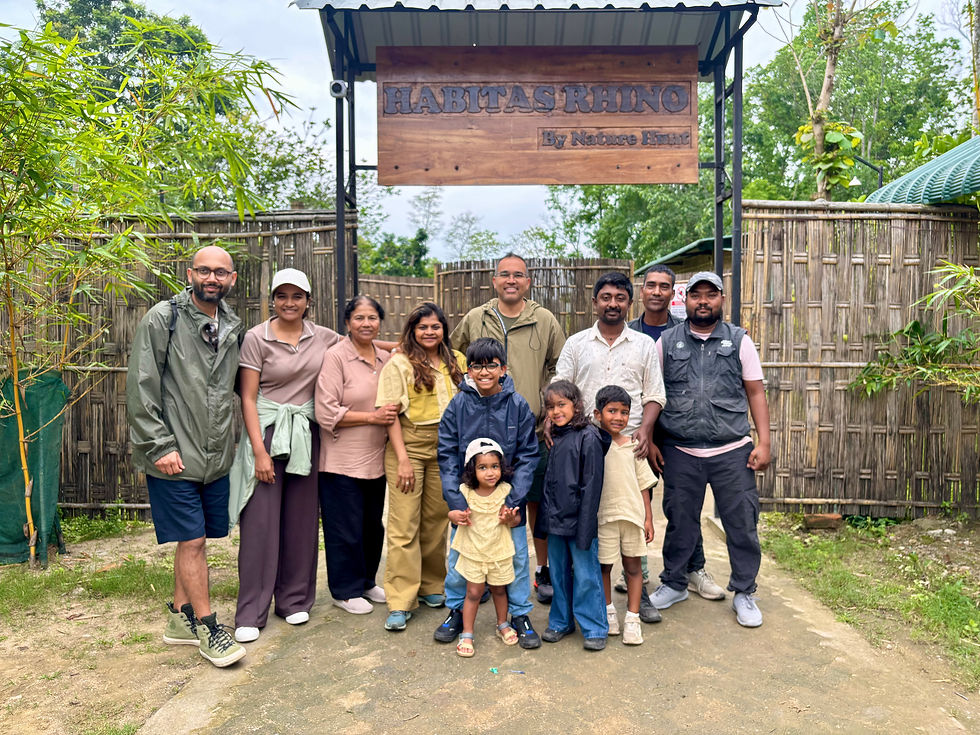
Then it was back to city life with a scenic five-hour drive to Guwahati.
Overnight in Guwahati.
Day 5: Kamakhya temple visit and Local shopping for Assamese products
Kamakhya Temple
We wanted to begin our day with a visit to the sacred Kamakhya Temple, one of the most revered Shakti Peethas in the country, known for its powerful feminine energy, tantric traditions, and deep-rooted mythology. The temple is located atop the Nilachal Hills, around 8 km from central Guwahati, and is best reached by cab or auto-rickshaw. Vehicles can go almost all the way up to the entrance, although during busy pilgrimage days you may still need to walk through crowded lanes lined with flower vendors and small shops.

But the exhaustion from the previous few days of travel finally caught up with us, so we settled for visiting only the temple exteriors that morning.
If you plan on visiting the sanctum for darshan, it is best to arrange a VIP entry pass through a priest well in advance. It usually costs around ₹500 per person and honestly makes a huge difference, especially during peak hours. The priests expertly guide you through the overwhelming sea of worshippers, many of whom begin queueing as early as 3 am.
Umananda Temple
For those who prefer a quieter spiritual experience away from heavy crowds, Umananda Temple is a wonderful option. Located on Peacock Island in the middle of the Brahmaputra River, the temple feels far more peaceful and relaxed compared to Kamakhya.
To reach the temple, you first need to head to the ferry point near Uzan Bazaar or Sukreswar Ghat in Guwahati. From there, regular ferries and small boats take visitors across the river to the island. The boat ride itself is short but scenic, with beautiful views of the Brahmaputra and the Guwahati skyline, making the journey just as enjoyable as the temple visit itself.
Nehru Park Guwahati
While we headed out shopping, Robin took the kids to the Nehru Park. It’s a well-known city park in the Pan Bazaar area of Guwahati, famous for its unique open-air displays of military equipment like aircraft and tanks, along with boat-themed sculptures, statues, and a lakeside promenade.

Fancy Bazaar
When you ask locals where to shop in Guwahati, almost everyone points you towards Fancy Bazaar. But honestly, walking through the area felt quite overwhelming for us, rickshaws constantly honking, vendors shouting over each other, narrow crowded lanes, and dust and pollution hanging in the air.
That said, there is no denying the sheer variety available there. You can find everything from local incense, brass vessels, silk sarees, jewellery, traditional Assamese artifacts, household items, and budget apparel. Personally though, we found most of the quality to be fairly average.
Handloom Emporiums
If you don’t mind skipping the budget shopping experience, I would highly recommend exploring the government-run and heritage handloom emporiums instead.
Pragjyotika Assam Emporium is one of the better places to shop for authentic Assamese textiles and handicrafts. Directly opposite it is OITIJJO - Heritage Emporium, another excellent store that beautifully showcases the handloom traditions and craftsmanship of Assam and the North-East.

Unlike the chaotic markets, these stores feel calmer and far more curated. The products are government priced or ethically sourced, and the quality difference is immediately noticeable. You can find authentic mekhela chadors, eri and muga silk sarees, handwoven stoles, bamboo crafts, tribal jewellery, organic products, handloom fabrics, and beautifully crafted souvenirs that actually feel worth carrying back home.
If you’re looking to experience the cultural heart of Guwahati in a short time, I’d highly recommend this guided walking tour with a boat ride to Umananda Temple. Over the course of 3 hours, you get to explore heritage landmarks, local markets, museums, and the Brahmaputra riverfront, while also learning about the city through a local guide. At around $20–21 per person, it’s honestly one of the easiest and most immersive ways to experience Guwahati beyond the usual tourist checklist. BOOK YOUR TOUR HERE - Walk and Explore Guwahati City: Guided Tour with Boat Ride |
Assamese Thali
Before leaving Guwahati, we wanted to have one final Assamese thali. Assamese food is known for its fresh ingredients, subtle flavors, and light use of spices. A traditional thali usually includes Bhaat (steamed rice), Khar (traditional Assamese dish made with raw papaya), Dal (lentils), Pitika (Assamese mashed potatoes with mustard oil), and a seasonal vegetable dish. The thali also comes with Kukura Curry (country chicken curry), Tenga Maas (fish curry with raw mango and tomato), Kharoli (mustard paste with onions), Khorisa (bamboo shoot preparation), and Maanh Gur (spiced gram lentil mix). The meal ends with Payas or Doi (rice pudding or curd), making it a comforting and traditional Assamese dining experience.

Some other dishes commonly found in a traditional Assamese thali are Xaak Bhaji (stir-fried leafy greens), Aloo Bengena Pitika (mashed potato and brinjal), Mati Mahor Dal (black lentils), Lai Xaak (mustard greens), Posola (banana stem preparation), Bilahi Boror Tenga (lentil dumplings in tangy tomato curry), Duck Curry (often cooked with ash gourd or sesame), Fish Fry, Pork with Bamboo Shoot, and different chutneys made with herbs or dried fish.
A great stop on the way is the Choran Ahem Karbi Ethnic Food Center at Natun Danga, around 1.5 hours from Kaziranga, known for authentic Karbi and Assamese tribal cuisine served in a rustic local setting. Karbi food feels more smoky, fermented, and forest-inspired.
Recommended repeatedly by locals, both Paradise Restaurant and Heritage Khorikaa are located opposite each other and are popular for traditional Assamese meals served in a more comfortable setting.

Apart from the thali, Paradise is also known for some excellent regional dishes like duck curry cooked with ash gourd, smoked pork preparations inspired by tribal cuisines, bamboo shoot curries, fish steamed in banana leaf, pigeon meat preparations during seasonal availability and traditional Assamese desserts like Payox.
Michinga, another restaurant famed for its Assamese bhojan, is located in the Six Mile-Jayanagar Road area of Guwahati, making it fairly easy for tourists to reach from the main highway or airport side of the city. Heritage Khorikaa, equally good, is situated in central Guwahati at Chandmari on GNB Road,
It felt like the perfect way to end our Assam journey, one last slow meal before heading back home.
Closing Thoughts
One thing this trip made me realize is how late in life I discovered Northeast India, a region so incredibly rich in natural beauty, culture, and experiences. It has only deepened my desire to explore the rest of the Northeast now.
It also made me want more people to know about Kaziranga, how extraordinary it is to witness the rare one-horned rhinoceros thriving in such abundance there, and why that makes the park so special.
Maybe someday, through the stories from our travels, someone will feel inspired to set out and explore the world the way Sidd and I love to.
If you enjoyed reading my blog post and like to support my blog, I’d love it if you gave it a ❤️ and hit SUBSCRIBE for more updates. Feel free to share it with your friends and family too! If you have any questions or want to chat about travel or anything else you'd like to know more about, I’m just a message away.


Comments