


Exploring Zagreb on Foot: 24 Hours in Croatia's Capital

Updated: Jan 12
Why Zagreb Was The Perfect Final Stop
Zagreb is the capital of Croatia. It ended up being our final stop on our 1-week vacation in Croatia simply because it was the easiest place to wind down before heading home, and honestly, that worked out perfectly. One full day here is more than enough because the city is compact, easy to navigate, and most of the highlights are within walking distance. You get the charm, the history, the cafés, and the atmosphere without feeling rushed. It’s the kind of place where you can see a lot, enjoy it all, and still feel relaxed by the end of the day.

For those who don't know, Zagreb is located in the north of Croatia, just below the Medvednica mountains and along the Sava River, close to the Slovenian border. Its name is said to come from a word meaning 'to scoop up,' based on an old legend about someone digging for water. With about 770,000 people in the city and over a million in the wider area, it’s Croatia’s biggest city, lively, but never overwhelming.
Getting Into Zagreb: Transport and Accommodation Options
The main airport, Franjo Tuđman Airport, is only about 15 kilometers from the city. To get into the center, you can hop on the airport shuttle bus to Zagreb Bus Station and then change to the blue trams that run across the city. Tram 6 and Tram 8 are the most convenient for reaching the heart of town, including Ban Jelačić Square.
If you’re stopping for the day, you can store your luggage safely at Zagreb Glavni Kolodvor (the main train station) where locker facilities are available. And if you decide to stay overnight, you’ll find plenty of hotels right in the center. Esplanade Zagreb Hotel is for a classic luxury stay, Hotel Dubrovnik for a comfortable mid-range option, or the modern Canopy by Hilton just a short walk from the historic core. All are perfect bases if you plan on spending two days exploring the city.
So, here goes my 24 hours in Croatia's Capital City, Zagreb.
Ban Jelačić Square – The Heart of Zagreb
We began our day in Ban Jelačić Square, the lively main square of Zagreb. Excitedly, I spotted the impressive statue of Ban Josip Jelačić, Zagreb’s beloved national hero, right in front of us. And just behind the statue? That’s the building where our apartment was! Yes, we were living right in the heart of the city! 😃

Surrounded by grand old buildings and buzzing trams, this square is where Zagreb truly comes alive. There’s nothing to enter here, but it’s the perfect starting point for any walking tour. We grabbed a quick coffee and started walking towards the old town.

Dolac Market
Just behind Ban Jelačić Square sits Dolac Market, the place locals lovingly call “the belly of Zagreb.” It’s impossible to miss with its bright red parasols and rows of stalls bursting with fresh fruits, vegetables, flowers, cheeses, and jars of golden honey. The market is open every day, but the mornings are when it feels most alive. We wandered through the market and ended up buying a few lovely things to take home: a Zagreb football jersey for Kiu, fragrant Croatian honey, local olive oil, and a mix of dried herbs that now instantly remind us of Zagreb every time we open the jar.

Radićeva Street, Upper Town (Gornji Grad)
Walk a few steps north and you’ll reach Radićeva Street. As you wander up Radićeva Street toward the Stone Gate, you’ll spot one of the cutest and most patriotic façades in Zagreb, a storefront draped with an oversized Croatian red-and-white checkerboard tie. This little boutique, Kravata Zagreb, celebrates one of Croatia’s proudest cultural contributions: the necktie (yes, ties originate from Croatian soldiers in the 17th century!). Croatia is widely believed to be the birthplace of the modern cravat, and Zagreb is one of the few cities in the world that celebrates the tie so proudly. The shop is small but charming, and you can step inside at any time during opening hours (usually 10:00–18:00). They sell handmade ties, scarves, and accessories, many in Croatia’s iconic šahovnica (checkerboard) pattern.

Stone Gate – The Secret Passage
Climbing up into the Upper Town, we entered the Stone Gate, the only surviving medieval gate of Zagreb. Inside the dim passageway is a tiny chapel where locals quietly light candles and pray. The Stone Gate is one of the most sacred and historic places in Zagreb. Inside this dim, arched passage is a small chapel dedicated to the Virgin Mary, the only painting that survived a massive fire in 1731. Locals and visitors stop here throughout the day to pray, light a candle, or just soak in the peaceful atmosphere. It’s peaceful, spiritual, and completely open 24/7.

St. Mark’s Church – Zagreb’s Most Famous Roof
A few minutes’ walk uphill brought us to St. Mark’s Church, the postcard-perfect symbol of Zagreb. Its colorful tiled roof shows two huge coats of arms that shimmer beautifully in the sunlight. You can’t always go inside (it’s usually only open during evening Mass), but the outside alone is stunning. The church stands in the middle of a quiet old square surrounded by government buildings, giving it a calm, grand feel.

It’s one of the most peaceful places in Zagreb and the perfect spot for photos.
St. Catherine’s Church
After spending time in St. Mark’s Square, we continued our walk down the gentle slope toward St. Catherine’s Church, one of the prettiest baroque churches in Zagreb. The street feels peaceful, with pastel houses, Croatian flags fluttering from old façades, and the tall green spire peeking out above the rooftops. This short stretch is lovely to walk in the late afternoon.

If the St. Catherine’s Church is open, you can step inside for free. The interior is simple but elegant. We spent a few minutes here before continuing our walk downhill.
Greek Catholic Co-Cathedral – A Hidden Gem You Shouldn’t Miss
A few steps away, we found the Greek Catholic Co-Cathedral of St. Cyril and Methodius — a real surprise. From the outside, it looks modest, but the moment you step in, you’re greeted by glowing gold icons, ornate wooden carvings, and a grand chandelier that fills the space with warmth. It’s usually open around service hours, and it’s completely free to enter. This little church is one of Zagreb’s hidden treasures and worth a quick stop.

Lotrščak Tower (Walk downhill via Strossmayer Promenade)
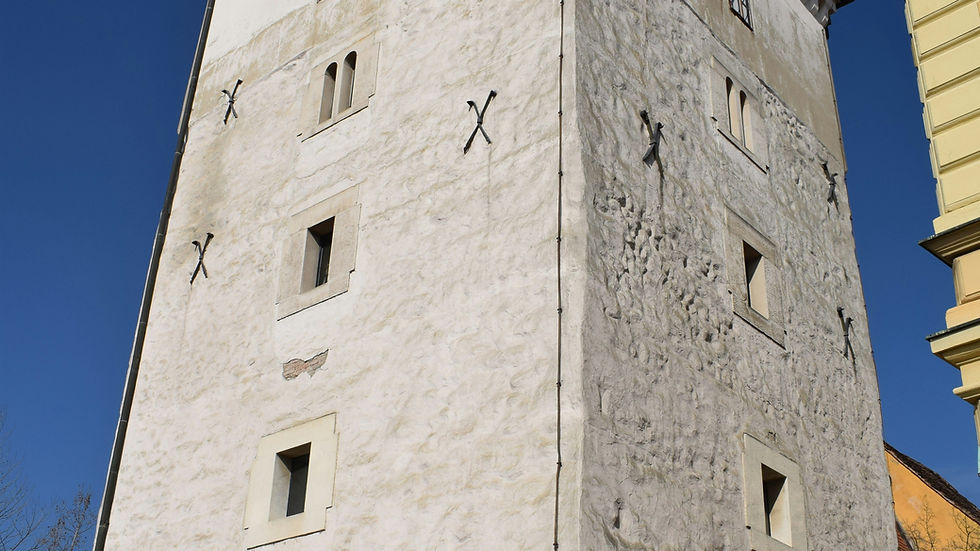
From the Greek Catholic Co-Cathedral, we continued our walk along the peaceful Strossmayer Promenade and soon reached Lotrščak Tower, one of the oldest landmarks in Zagreb. The tower once guarded the southern gate of the Upper Town, and today it’s best known for the Grič Cannon, which fires every day at noon. You can climb to the top for a small fee, and the view is absolutely worth it. From atop, you can see the rooftops, church towers, and the whole spread of the Lower Town below. Even if you don’t go inside, the tower and its surroundings are lovely to explore, with artists, viewpoints, and a relaxed walking path that slowly leads you downhill toward the rest of the city.
Ćirilometodska Street – The Perfect View Back to St. Mark’s
As we continued walking, we turned into Ćirilometodska Street (Pronounce “Chee-ree-lo-meh-tod-ska”), and suddenly the colorful tiled roof of St. Mark’s Church reappeared at the far end of the road. It’s one of the best framed views of the church, and almost everyone pauses here for photos. Looking back, it felt like we were walking inside a painting — cobblestones, old lanterns, and that iconic roof shining at the end.

Tkalčićeva Street – Zagreb’s Cutest Café Lane
A short walk from the square brought us to Tkalčićeva Street (Pronounce “Tkal-chee-che-va”), a colorful, cheerful lane packed with cafés, gelato stands, and little boutiques. The pastel houses and wooden balconies give it such a charming old-world feel. The kids loved the street’s playful vibe, and we stopped here for a drink before continuing. You can visit at any time, and it’s equally lovely in the morning and evening. Fun fact: this lively street was once a flowing stream!

Graffiti Alley
From here, we slowly made our way downhill into the Lower Town. The route passed through narrow stone alleys, and one of them opened into a quirky graffiti-covered passage. The walls were full of colorful scribbles, doodles, and messages left by strangers over the years. It’s not an official attraction, but it’s a fun, raw little slice of Zagreb’s street culture, and the kids loved spotting random drawings.

Zagreb Cathedral – Under Restoration but Still Majestic
Next, we reached the area around the Zagreb Cathedral, Croatia’s tallest landmark. The cathedral is still under renovation after the 2020 earthquake, and we saw the newly restored copper dome displayed outside. Even though parts are closed, you can usually step inside between 10:00 and 17:00. Right in front of the cathedral stands the Cathedral Column, the beautiful golden statue of the Virgin Mary surrounded by four angels right in front of the Zagreb Cathedral. The cathedral remains one of Zagreb’s most beautiful sights and is full of history.

Art Street on Martićeva – A Burst of Colour
Walking further, we passed this vibrant street-art walkway painted in bright colors and quirky shapes. It instantly lifts your mood and is amazing for photos. This part of Zagreb loves creativity, and the murals are free and open to explore anytime. It’s a fun, modern contrast to the historic old town.

Zrinjevac Park
A few minutes later, the city opened up again into Zrinjevac Park, one of the prettiest green spaces in Zagreb. It’s part of the famous 'Lenuci Horseshoe', a series of landscaped parks that give Zagreb its green look. There are some really tall old trees here, dating more than 150 years. The wide lawns offer a perfect landscape for the Christmas market every year, with food and art stalls popping up. We took a short break on a bench here, letting the kids run around while we enjoyed the slower side of the city. Depending on when you visit, the park often hosts fairs and open-air events.

Cvjetni Trg (Flower Square)
One of the sweetest surprises in Zagreb is how the city is filled with friendly sculptures you can actually interact with. In Cvjetni Trg (Flower Square), the kids loved hopping onto the lap of Tin Ujević, Croatia’s beloved poet, and posing with the bronze statue of Dražen Petrović, the country’s greatest basketball legend. And these are just two of many. As you wander through the center, you’ll keep spotting statues tucked between cafés, parks, and old buildings. As for the Flower Square, the nickname comes from the fact that for decades, this spot has been home to rows of flower stalls and florists that filled the square with colorful bouquets every day.

Zagreb City Museum
We walked from our accommodation at Ban Jelačić Square to the Zagreb City Museum in about 10 minutes, following the gentle uphill streets of the Upper Town. At the entrance, we paid €7 per adult, and the kids entered on the reduced family rate. The museum is spread across three main floors (plus the cellars), and it’s bigger than it looks from outside. What makes it special is how it tells the full story of Zagreb, from prehistoric times to medieval life, old maps, city models, everyday objects, and the city’s growth into the capital it is today. One highlight we saw was a large-scale model of 19th-century Zagreb and rooms filled with urban planning artifacts.

We spent around 1 to 1.5 hours exploring the exhibits at an easy pace. The museum is open from around 10:00 to 18:00 from Tuesday to Saturday, and on Sunday the hours are shorter (often until 14:00).
Apart from the Zagreb City Museum, there are plenty of fun spots to explore if you have extra time. The Museum of Illusions is full of mind-bending rooms and tricks, the Chocolate Museum offers a sweet look into the world of chocolate with tastings, and the Nikola Tesla Museum gives you a fascinating glimpse into the genius and inventions of Tesla.

You can book tickets for all of them through the links below.
Final Thoughts
Our last day in Croatia was exactly what we needed. Zagreb gave us a calm, easy 24 hours where we could just wander, relax, and enjoy the city at our own pace. It’s also the perfect gateway for getting in and out of the country, thanks to Zagreb Franjo Tuđman Airport, about 17 km (10.5 miles) from the city center. If you’re visiting Croatia, I highly recommend ending your trip here to soak in the city’s charm and have a stress-free departure.
If you enjoyed reading my blog post, I’d love it if you gave it a thumbs-up 👍🏼 and hit subscribe for more updates. Feel free to share it with your friends and family too! If you have any questions or want to chat about travel or anything else you'd like to know more about, I’m just a message away.


Comments