


Why Kinderdijk Windmills Are a UNESCO World Heritage Site (Complete Guide)

Hey there! As you read through this post, feel free to click on the affiliate links highlighted in BLUE. If you decide to book a hotel or purchase something through them, I’ll earn a small commission, at no extra cost to you. These commissions help keep The Morning Brew running and allow me to create more awesome content. Thanks for your support!
When you think holland, you think windmills. That iconic image of the windmills lined up against glowing sunset skies, surrounded by calm canals and endless green fields feels almost unreal. But little does anyone know that it’s not just a symbol of Dutch beauty but it is also a symbol of humanity and struggle against the nature’s forces and the Dutch fight against water and their centuries-old struggle to quite literally stay above it. When I first came to the Netherlands, I only visited Zaanse Schans and learnt all about windmills there, how they were used for grinding grain, producing oil, sawing wood, and other industrial purposes. But I made the mistake of assuming that the purpose of visiting Zaanse Schans and Kinderdijk would be the same, so I didn’t visit Kinderdijk for the longest time. It was only much later that I finally decided to go, mainly because I kept wondering what all the fuss was about and why it had a UNESCO World Heritage status.
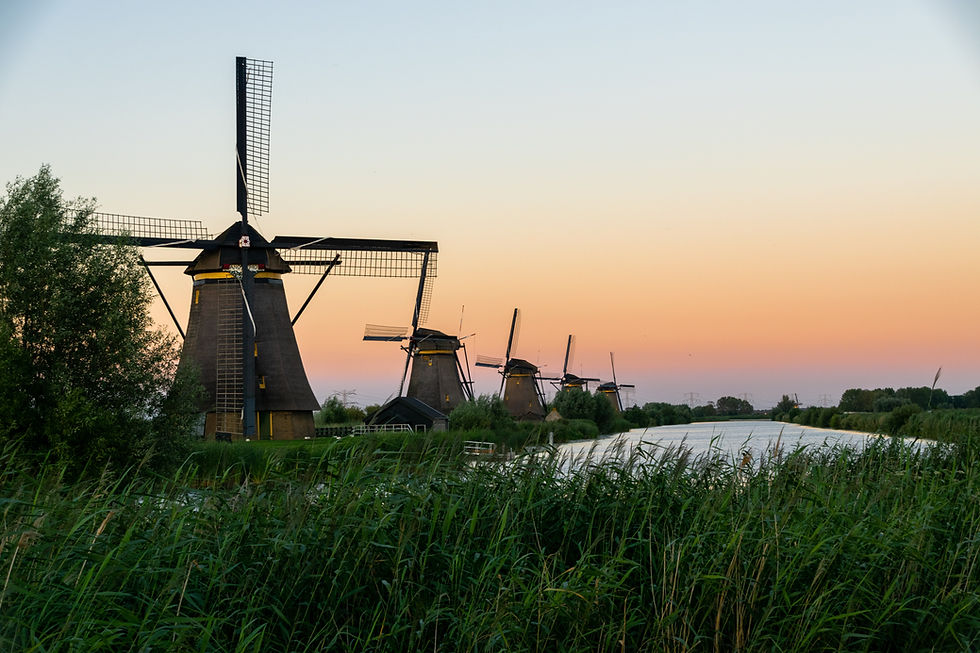
A visit to Kinderdijk makes you realize the true meaning behind these windmills and that they are not just beautiful but powerful symbols of human resilience and ingenuity.
Did you know? The earliest recorded windmills in the Netherlands date back to around the 13th century, with references as early as 1221. What’s interesting is that these windmills weren’t built for grinding grain like many people assume, but were primarily used for water management, helping drain excess water from low-lying regions like the Alblasserwaard and making the land suitable for farming and living.
What makes Kinderdijk special
The UNESCO World Heritage site of Kinderdijk is one of the most unique places in the Netherlands. Everything here revolves around water, controlling it, managing it, and living with it.
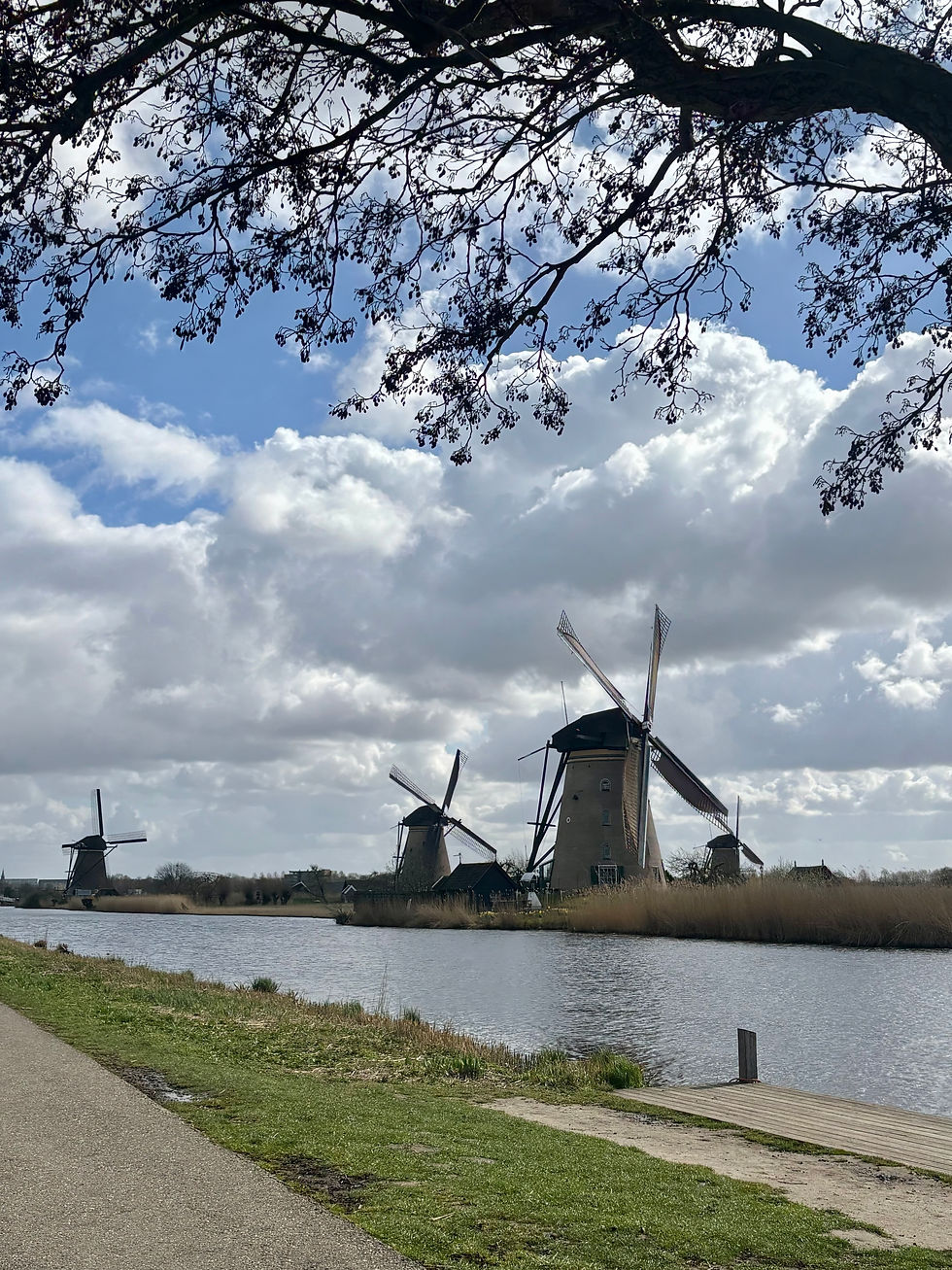
The windmills were originally built to pump excess water out of the low-lying polders and keep the land dry. Without them, much of this region would simply be underwater.
Tickets and Getting Around
We reached the village of Kinderdijk, and even along the drive in, we could already spot rows of windmills lined up in the distance, it honestly felt like the experience had already begun. At the entrance, we paid about €9.5 for the car parking, and the ticket center was conveniently located right opposite.
Reaching Kinderdijk without a car is easy thanks to excellent public transport. The most convenient route is from Rotterdam, where you can take the scenic waterbus (Line 20 or 21) directly to Kinderdijk in about 40 minutes. From cities like Amsterdam, Utrecht, or The Hague, simply take a train to Rotterdam and then transfer to the waterbus.
The ticket, which was around €21, included quite a lot: access to two museum windmills, a boat tour, either covering all the windmills round-trip or a shorter route between the first two stops, entry to the Wisboom Pumping Station, and an exhibition. One thing to note, museum cards are not accepted here. The ticket center itself also has a café, and there are benches outside if you want to sit and enjoy a picnic before or after your visit. There is also a terrace above the ticket center from where you get a really nice view of the entire area, with the wind brushing past and the reflections of the windmills perfectly mirrored in the calm canals. If you can, try visiting early in the morning or around sunset, when the light makes the entire landscape even more magical and it isn’t that crowded.

After getting our tickets, we boarded the boat to the first windmill, which was a great way to take in the views, but you can also choose to walk or cycle through the site. Walking takes about 20 minutes between each major stop, and honestly, if you want to explore everything properly at a relaxed pace, stopping, observing, and soaking it all in, you should set aside at least 4 to 5 hours.
The story behind the name ‘Kinderdijk’
So before that let’s get to know how did the name Kinderdijk come about in the first place. Its literal translation is ‘children’s dyke’ and the name originated thanks to a legend. On 19 November 1421, the St. Elisabeth's Flood took place.

According to the story, after the flood, a cradle was seen floating near the dyke. Inside was a baby, later known as Beatrice, and a cat. The cat kept jumping from side to side, balancing the cradle and keeping it from tipping over.
That image of survival and balance became symbolic of the region itself. There is an artwork displayed in the museum lake adjacent to the pumping station, by the artist Roel Teeuwen, which depicts the legend's story. We missed seeing this from the bridge while walking towards the pumping station. An informative board placed there led us to the artwork. Thankfully!
UNESCO Heritage Status
Over 20 years ago, UNESCO recognized Kinderdijk as a World Heritage Site because of its incredible historical and engineering value. These windmills are living proof of how humans adapted to extreme environmental challenges.
Maintaining them isn’t easy though, keeping just one windmill operational costs around €20,000 per year. With 19 windmills in total, it’s a massive effort. Of these, 16 belong to the two main water boards, Nederwaard and Overwaard, while the remaining 3 are spread across the area, adding to the scale and complexity of the system. Visitor contributions play a big role in preserving this heritage.
Did you know? In the 1950s, fishing was also an important part of life here. Locals relied on it both for food and income. It was a simple yet essential way of sustaining families in the region.
How Kinderdijk was designed
Before exploring further, it’s important to understand how Kinderdijk was actually designed. The area itself is part of the Alblasserwaard, a low-lying polder region surrounded by rivers and highly prone to flooding. This is exactly why such an advanced water management system was needed here. The entire area was managed by two separate water boards, Nederwaard and Overwaard, each with its own canal system, its own way of controlling water levels, and 8 windmills each (16 in total).

When you’re at Kinderdijk, you can tell them apart quite easily. The Nederwaard windmills are round and built from brick, while the Overwaard windmills are octagonal with thatched roofs and a slightly more decorative look. This wasn’t just for appearance, the entire system was designed to move water step by step from the low-lying polders of the Alblasserwaard into higher canals and eventually out to the rivers. It was a smart and efficient way to control water levels and protect the land from flooding, showing how the Dutch learned to live with water rather than fight it.
First our boat stopped at the Nederwaard Windmill. This windmill was around 20–25 meters tall, with sails stretching roughly 25–28 meters, and was built mainly from brick with wooden internal parts and sails. We could enter this windmill and explore its interiors, which really gave a sense of how a miller’s family once lived and worked within such a small yet functional space.
Nederwaard Windmill
From the Nederwaard windmills onwards, the experience became much more personal and immersive. Our first stop was one of these windmills, and stepping inside felt like going back in time. The Nederwaard windmills, built in the 18th century (around 1738), are round and constructed from brick, which makes them heavier and sturdier in design. But that weight also had its downsides, over time, some of these mills actually began to tilt (in some cases by several tens of centimeters) due to the soft, waterlogged soil beneath them. Considering the strong winds, especially from the east and southeast, this made them quite vulnerable and even risky structures. One of them has been turned into a museum, so you can actually see how a miller’s family lived.
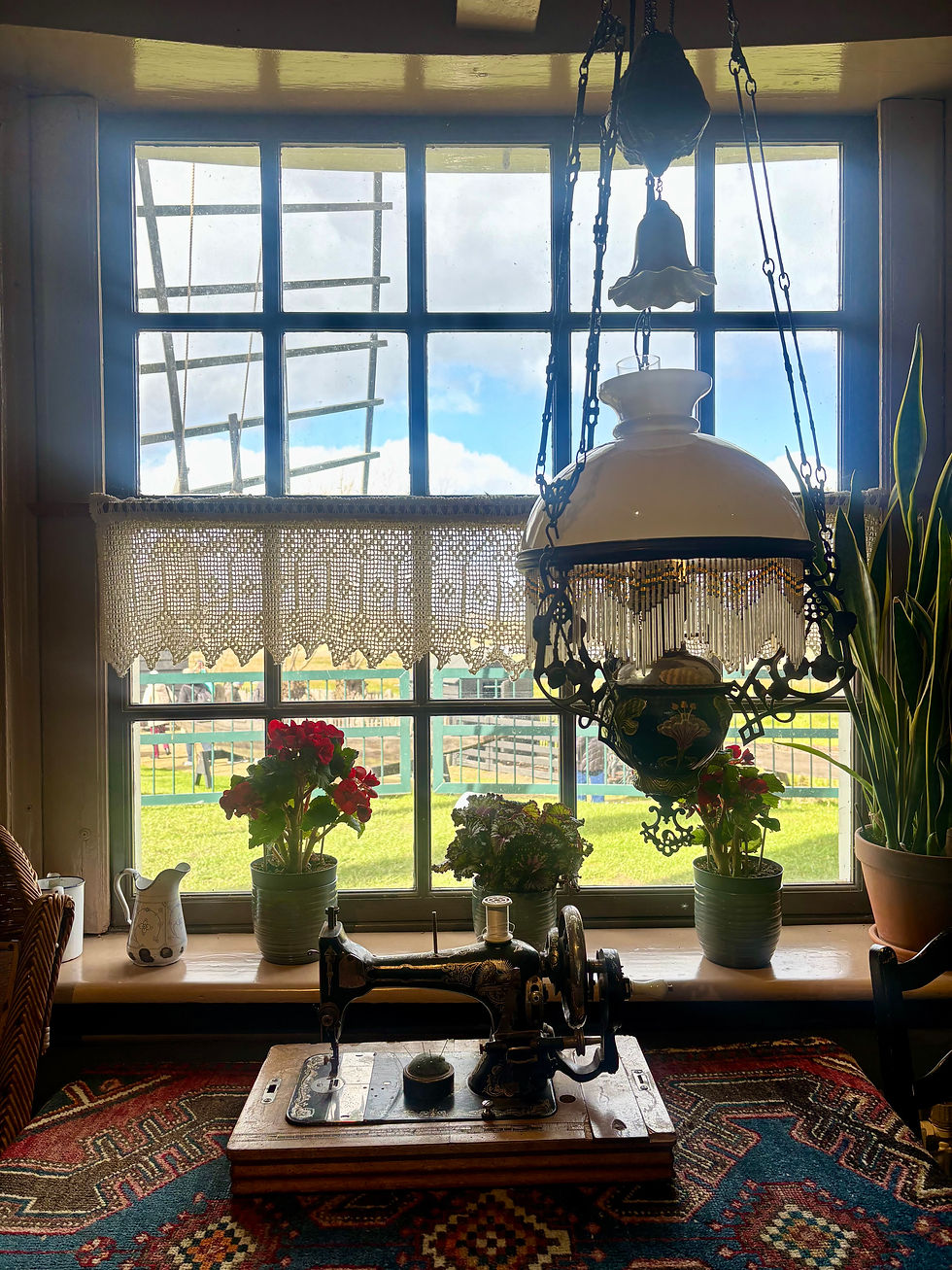
What really struck me was how small the space was, families with up to 12 children lived here. The ground floor had the main living area with a fireplace, which was the only heated space, while the first attic was used for the children’s beds and storage, and the second attic housed the massive spinning shaft of the windmill.

Right outside, there was even a traditional baker’s oven where women would bake bread using firewood.
Did you know? The canals that you see on the left and the right from the boat were built by hands by the inhabitants of the area using wooden shovels back in the day.
After our visit, we hopped onto the boat again and made our way to the Overwaard windmill. As soon as you get off the boat, turn right, take the bridge, and then walk towards your left to reach it. If you go towards the right instead, you’ll end up heading back towards the Nederwaard windmills. It might sound simple, but it can actually get a bit confusing there, so it’s good to keep this in mind.
Overwaard Windmill
After this, we took the boat again to the Overwaard windmills, which immediately felt a bit more refined. The Overwaard windmills, also built in the 18th century (around 1740), were designed differently, learning from earlier construction challenges. These mills are octagonal, lighter in structure, and made primarily of wood with thatched roofs, making them more flexible and better suited to the unstable ground.

However, this lighter design came with its own risks, being made of wood and thatch meant they were more vulnerable to fire, especially due to friction between moving parts and strong winds. Still, they were considered the more “elite” water authority, with slightly more decorative finishes like wood carvings. You could clearly see the difference in design compared to the Nederwaard mills.

Little did we realize that it was almost 3:45 pm and there was a boat back at 4 pm which we needed to take otherwise the next boat would be at 4:40 which gives us very less time to visit the pumping station and the film because the museum closed at 5:30 pm. So we headed back to our boat to catch in time.
Wisboom Pumping Station
Our penultimate stop was the Wisboom Pumping Station, and this is where everything really came together. Originally built in 1868 as a steam-powered station and later converted to electricity, it showed just how much technology had evolved. This one station could do the work of about 100 windmills. This also explains why windmills were eventually replaced, pumping stations were faster, more reliable, and didn’t depend on wind conditions, making water management far more efficient.

The guides explained the entire system in detail, from how each windmill contributes to moving water, to how coal and steam were used back in the day. There were miniature models, real machinery, and even interactive displays, which made it all so much easier to understand.
The Exhibition
Our final stop was the exhibition, which turned out to be a nice way to wrap up the entire experience. It features a short 7-minute film that takes you through the origins of Kinderdijk, tracing its history all the way back to the 12th century, when the foundations of this whole water management system were first laid. It helps connect everything you’ve seen so far and puts the entire place into perspective. The space also includes informative display boards that explain the history, engineering, and people behind Kinderdijk, making it a simple but insightful stop before you leave.
Final thoughts
My initial and final thought after visiting Kinderdijk was honestly the same, how did I manage to miss this place in my 7 years of living in the Netherlands? I think I had always assumed it would be similar to Zaanse Schans, maybe even less charming since it doesn’t have the same elements like photo spots, clog workshops, or cheese tastings, and isn’t marketed as heavily. But the two places offer very different experiences in their own way. Zaanse Schans is beautifully curated and gives you a lively, accessible introduction to Dutch culture and windmills, almost like an open-air museum designed for visitors. Kinderdijk, on the other hand, feels more raw and authentic, where the windmills exist in their original setting and purpose. These windmills weren’t built for producing flour or oil, they were built for survival, to manage water and protect the land. It’s less about presentation and more about history and function, which makes the experience deeper, and in its own way, just as memorable. When you actually see the scale of the place and understand the history behind it, it genuinely feels like a wonder of the world. It gives you a whole new appreciation for Dutch engineering and resilience. So don’t make the mistake I did, take the time to visit, explore, and really understand why they say, “God made the world, but the Dutch made Holland.”
If you enjoyed reading my blog post, I’d love it if you gave it a thumbs-up 👍🏼 and hit subscribe for more updates. Feel free to share it with your friends and family too! If you have any questions or want to chat about travel or anything else you'd like to know more about, I’m just a message away.


Comments